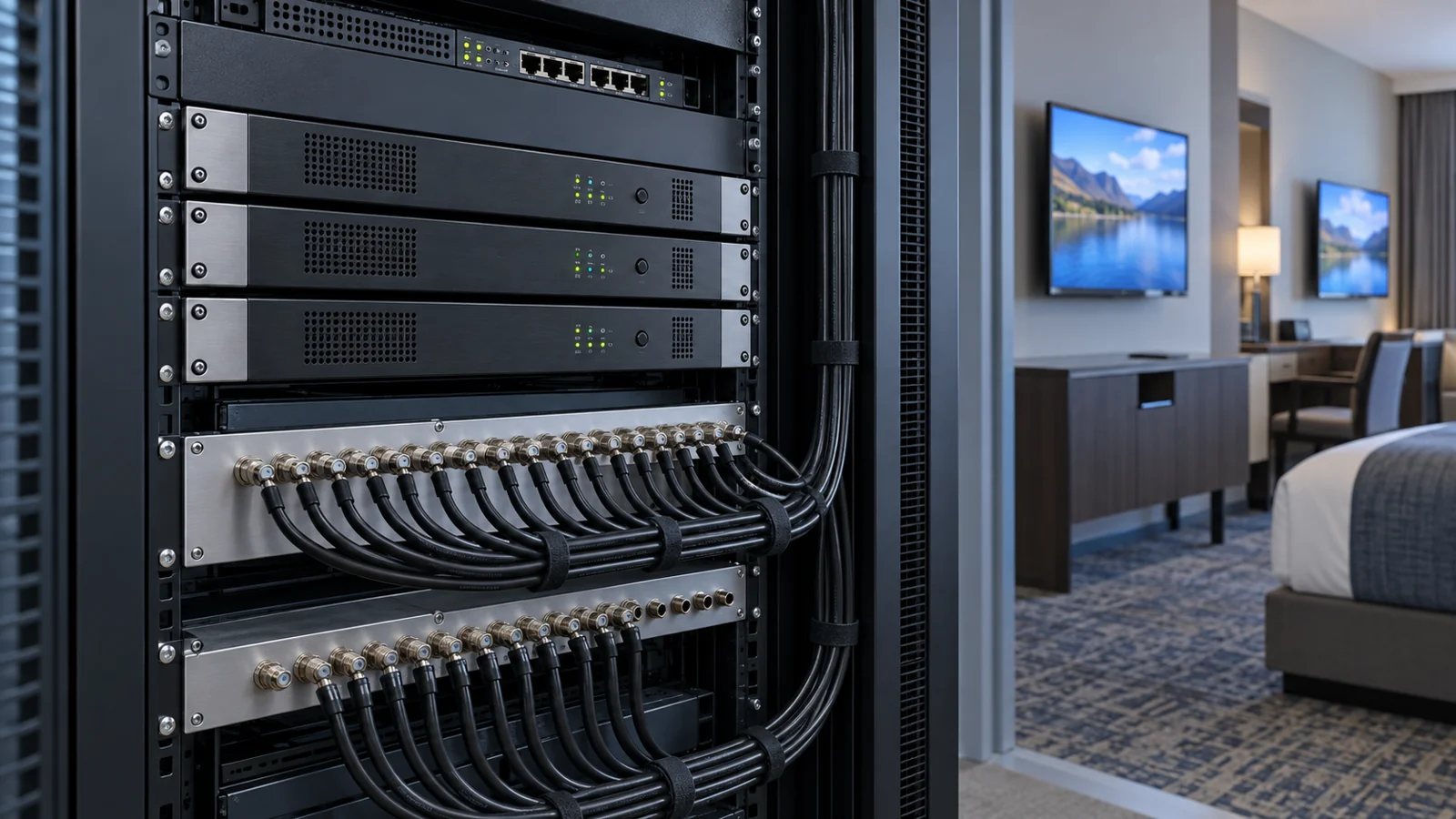
A hotel IPTV system is a managed service chain, not simply a server connected to room televisions. Successful procurement depends on how content enters the headend, how the network delivers it, how each television receives it, and how staff maintain the guest experience after installation.
This guide helps hotel engineering teams, system integrators, and B2B buyers turn requirements into an architecture and acceptance brief. It covers live television, on-demand capacity, compatible endpoints, optional property-management integration, and the questions that make supplier quotations comparable. It is a planning framework, not a promise that one configuration suits every property.
Start with the hotel IPTV system service brief
Begin with the experience the property actually needs. A hotel requiring a stable live channel lineup has different dependencies from one requiring personalized welcome screens, an on-demand library, or interactive service requests. Define essential functions separately from future options so that the first deployment remains testable and supportable.
Record the number of rooms, televisions per room, public-area displays, expected occupancy, and expansion plans. Add the operating hours, permitted maintenance windows, and responsible hotel departments. The number of terminals is a useful starting point, but it does not specify concurrent streams, storage demand, network throughput, or integration work.
Assign ownership before comparing equipment
The broadcaster or operator owns the approved source conditions; the hotel owns its service requirements; the network contractor owns the agreed distribution scope; and the IPTV supplier owns the capabilities documented in its proposal. Clarify handover boundaries instead of allowing every fault to become a disagreement between contractors.
SOUKA's hotel IPTV solution is the commercial starting point for a project review. Use this article to prepare the evidence behind that review: source details, endpoint inventory, network drawings, and measurable acceptance conditions. Keep pricing requests tied to those requirements rather than to a generic room count.
A useful first deliverable is a one-page service matrix: what guests should see, what staff should control, which external systems are involved, and what must keep working during an outage. Have hotel operations approve that matrix before turning it into a bill of materials.
Separate the headend, middleware, network, and endpoints
The hotel IPTV architecture should identify functions even when a supplier combines several inside one appliance. A reception gateway or encoder prepares authorized sources. Management software organizes channels and presentation. The distribution network carries media and control traffic. A compatible smart TV application or set-top box renders the service in the room.
| Layer | Planning question | Evidence to request |
|---|---|---|
| Source reception and encoding | Which feeds enter the system? | Input standards, codecs, output profiles, source authorization |
| Server and middleware | Which services and concurrency are included? | Licensed functions, sizing assumptions, backups |
| Managed network | How does traffic reach each room? | Topology, link budgets, multicast or unicast design |
| TV or set-top box | Can the installed device play and control the service? | Exact models, firmware, application and pilot results |
| Optional integration | Which hotel workflows cross system boundaries? | Interface scope, dependencies, test cases and ownership |
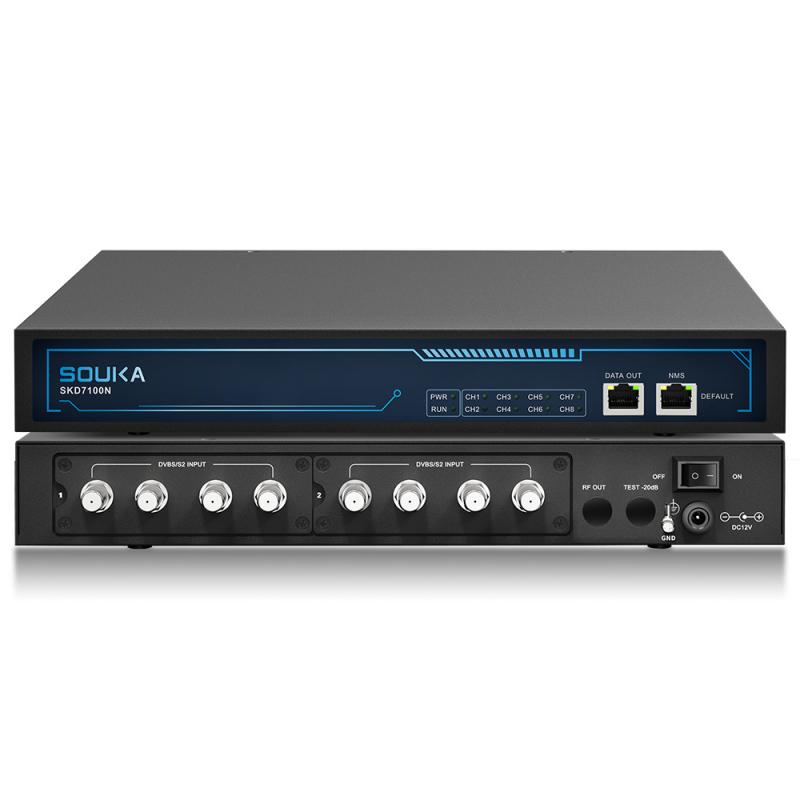
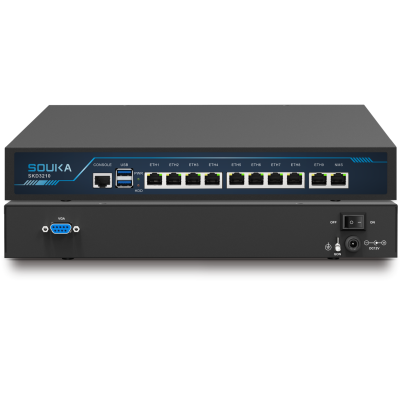
Review SOUKA's IPTV servers and streaming gateways, IPTV streamers and encoders, and hotel IPTV set-top boxes by their role in this chain. The product family name is not a substitute for the exact model configuration.
An integrated headend can simplify installation, while separated components may make expansion or replacement more flexible. Compare recovery procedures and failure impact alongside rack space. If one appliance provides several essential functions, establish how service will be restored when that appliance is unavailable. Neither architecture is automatically more reliable without a documented support plan.
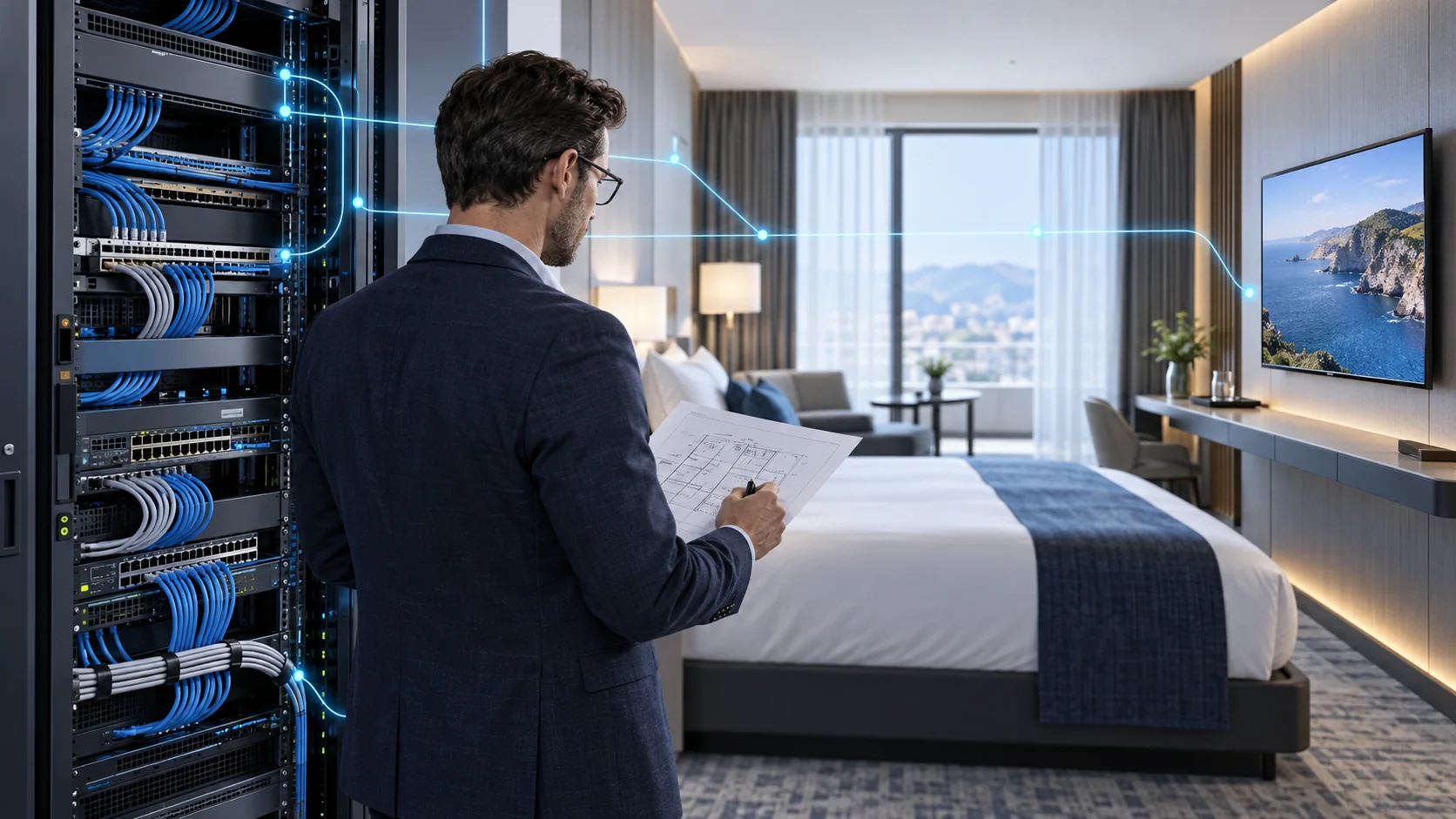
Audit content sources and encoding compatibility
List every required service with its source, input format, program type, and distribution method. A satellite receiver, terrestrial gateway, approved IP feed, and local information player may need different preparation. Confirm whether a supplier will pass through existing streams or re-encode them. That choice affects processing load, picture quality, and compatibility.
Do not assume that an HDMI connector means a commercial source can be redistributed. Confirm the provider's permitted hotel use and supported connection method with the provider. Hardware that accepts an input does not grant content rights or remove source protection requirements. Keep those decisions separate from equipment selection.
Use an end-to-end media profile
For each source, record video codec, profile, resolution, frame rate, bitrate behavior, audio codec, and any subtitle or caption requirement. Then check that the gateway, transport, player application, and room television accept the same profile. Supporting a codec in a catalogue does not establish support for every profile or container combination.
A local hotel channel can be piloted early because its source is easier to control. Test real motion and real audio, not only a still welcome slide. Include sports or other demanding content where the approved lineup requires it. Ask the supplier to explain which settings are fixed and which hotel staff may safely change.
Keep a channel register containing source identifiers, stream addresses, guest-facing names, and approved settings. This becomes the reference for commissioning and later fault diagnosis. When source equipment changes, rerun the compatibility checks rather than assuming the new receiver produces an identical output.
Size multicast and unicast traffic at each network link
Hotel IPTV bandwidth must be calculated for the delivery mode and the specific link being sized. It is not simply the room count multiplied by the advertised channel bitrate. Multicast can share a live stream across viewers on a link, while unicast creates an individual stream for each active session traversing that link.
For illustration only, assume twenty live streams each consume 8 Mbps of media payload. A link carrying all twenty multicast streams carries approximately 160 Mbps before overhead and other traffic, regardless of whether ten or one hundred downstream rooms view those same streams. A floor link may carry fewer streams if the forwarding design admits only requested groups.
By contrast, one hundred simultaneous unicast sessions at 8 Mbps require approximately 800 Mbps of media payload on a link carrying all those sessions. On-demand traffic, guest casting, application updates, and control traffic may add other loads. These are arithmetic examples, not measured SOUKA performance or recommended production bitrates.
Budget the busiest credible condition
Measure actual streams, account for variable bitrate and protocol overhead, and provide documented headroom. Evaluate the headend uplink, core links, floor uplinks, access ports, and any shared paths separately. Also assess server throughput and storage delivery when media originates locally. A fast port does not prove that the entire service chain can sustain the required concurrency.
Test the design under the planned peak mix of live and on-demand viewing. Record utilization, packet drops, and visible playback behavior at representative endpoints. Agree on project-specific limits before acceptance; avoid replacing those limits with an unsupported claim that gigabit networking is sufficient for every hotel.
Make multicast control and segmentation explicit
A managed network needs more than a separate label for television traffic. Define the IPTV VLANs, addressing, switching boundaries, management access, and any routing required between networks. Keep guest connectivity, administration, and media distribution separated according to the approved network design. A VLAN alone does not replace access-control policy.
For an IPv4 multicast design, confirm how receiver membership is learned and maintained. Cisco's IGMP configuration guidance explains the relationship between receiver reports, queries, and snooping forwarding tables. A suitable querier arrangement is needed; enabling a checkbox called IGMP snooping is not a complete design.
Have the network engineer specify the supported IGMP versions, querier placement, multicast-router ports where applicable, and behavior during topology changes. Configuration details depend on the actual switch platform and architecture. Do not paste another property's settings into production without validation.
Verify failure and recovery behavior
Test channel changes, idle periods, endpoint restarts, and switch or uplink recovery. Check whether traffic reaches unintended ports and whether services remain stable after membership tables change. Document the expected behavior before enabling accelerated leave features, particularly where several receivers share one downstream connection.
Assess wireless paths independently rather than assuming wired multicast behavior transfers to Wi-Fi. For room television service, choose a transport with a validated performance and support model. Preserve network backups and a simple fault-isolation map so that hotel staff can distinguish a missing source from a distribution or endpoint problem.
Choose smart TV applications or set-top boxes by pilot results
A smart TV IPTV solution may reduce external equipment, but compatibility depends on the exact television model, operating system, firmware, application deployment method, and hospitality controls. A consumer TV's ability to play an online video is not proof that it supports the hotel's chosen platform.
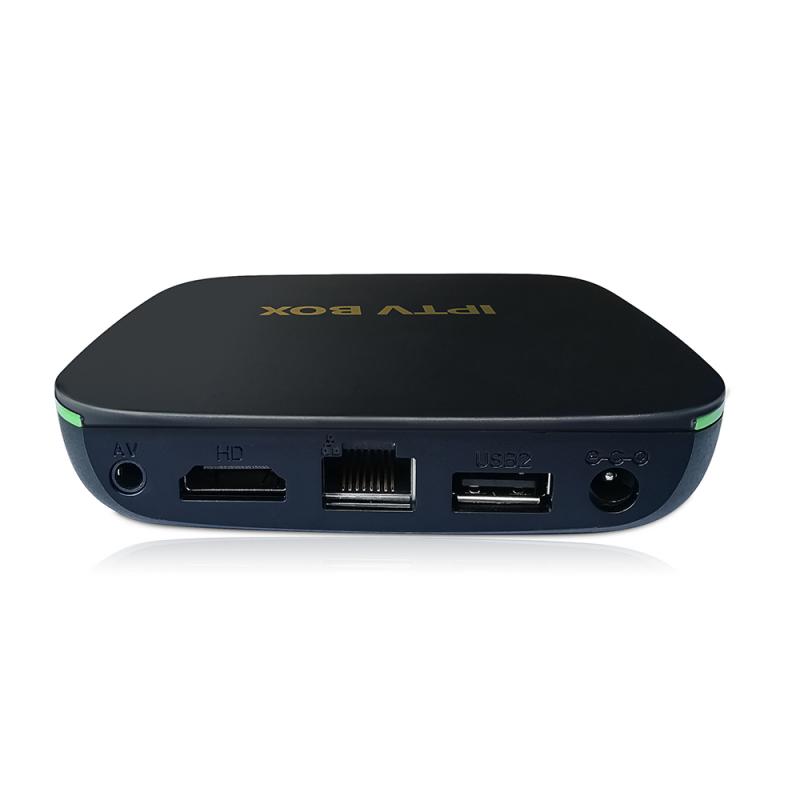
A set-top box can provide a consistent application environment and preserve usable displays, subject to the television's available inputs and control behavior. It also introduces power supplies, installation space, cabling, remotes, and maintenance responsibilities. Compare the full room installation and guest interaction rather than just the unit price.
Build an endpoint compatibility matrix
Include each TV family, its room quantity, connection type, approved player, firmware, and control method. For every family, test picture, sound, channel selection, remote operation, wake-up behavior, and recovery after loss of power or network connectivity. Check language rendering and accessible navigation with the actual hotel content.
The pilot should include the oldest retained model as well as newer displays. Agree how applications will be installed, updated, and restored, and who owns those tasks. Where a TV or box supports additional consumer applications, confirm how the hotel maintains a predictable guest interface without promising unsupported restrictions.
Use approved combinations in the procurement schedule. When a replacement TV is proposed later, treat it as a new endpoint variant until validated. This reduces the risk of a hotel ending up with individually functioning devices that cannot share a maintainable configuration or guest-facing operating procedure.
Specify guest services and PMS integration as separate work packages
Live channels, multilingual hotel information, promotions, and personalized functions are different service requirements. State which are included in the first release and which require additional software, content preparation, or external interfaces. A demonstration interface does not prove that every function is delivered by the quoted configuration.
Hotel IPTV PMS integration should begin with exact events and data fields, not a general promise of compatibility. Define check-in, room move, check-out, and any language or welcome-message behavior the property requires. Identify the PMS product and version, approved interface, credentials owner, and any vendor licensing or integration dependency.
Test the room lifecycle, including exceptions
Use synthetic guest data in the pilot. Test late events, duplicate events, interface outages, room moves, and recovery after reconnecting. At check-out, verify that personalized information and any permitted guest session data are cleared according to the agreed design. Confirm what the TV displays when the integration is unavailable.
Do not assume a television system alone provides secure guest casting, payment processing, or all room-control functions. Those requirements need their own compatibility, isolation, and workflow tests. If television and room automation are part of one project, evaluate SOUKA's integrated IPTV and GRMS solution with an explicitly defined interface scope.
Assign a hotel owner to content updates and translations. A technically correct deployment can still produce outdated information if menus, service contacts, and promotional content have no approval process. Require staff training on both routine updates and the procedures for disabling a faulty integration without interrupting essential television service.
Compare new IP infrastructure with a phased coax migration
For a renovation, inventory the existing coax and Ethernet infrastructure before deciding on a replacement path. A functioning coax network may continue serving linear channels while selected rooms or wings adopt IP-based services. The property may value a phased rollout that limits room access and preserves an accepted baseline.
Use the hotel cable TV solution to assess a coax-led option alongside IPTV. The decision depends on desired services, endpoint compatibility, installation disruption, measured network condition, and long-term support. Avoid claiming that either delivery method is universally cheaper or better.
Define the temporary state as carefully as the final state
Identify which guests receive each service during migration, how channel names stay consistent, and how staff diagnose faults in two systems. Keep separate acceptance criteria for RF reception and IP playback. An IP feed inside a headend does not make an RF room television an interactive IPTV endpoint.
Readers preparing an RF-led phase can use the HD modulator buying guide for hotel coax TV for the equipment-selection branch. For an existing guest-experience overview, see SOUKA’s hotel IPTV planning introduction. This procurement guide adds the technical evidence needed to turn those goals into an executable scope.
Record the rollback decision before migrating occupied rooms. Keep approved configuration exports and working source paths available until each phase passes acceptance. A migration plan should explain how the property returns to a known service state, not merely how the installer reaches the intended final diagram.
Require a measurable pilot and operational handover
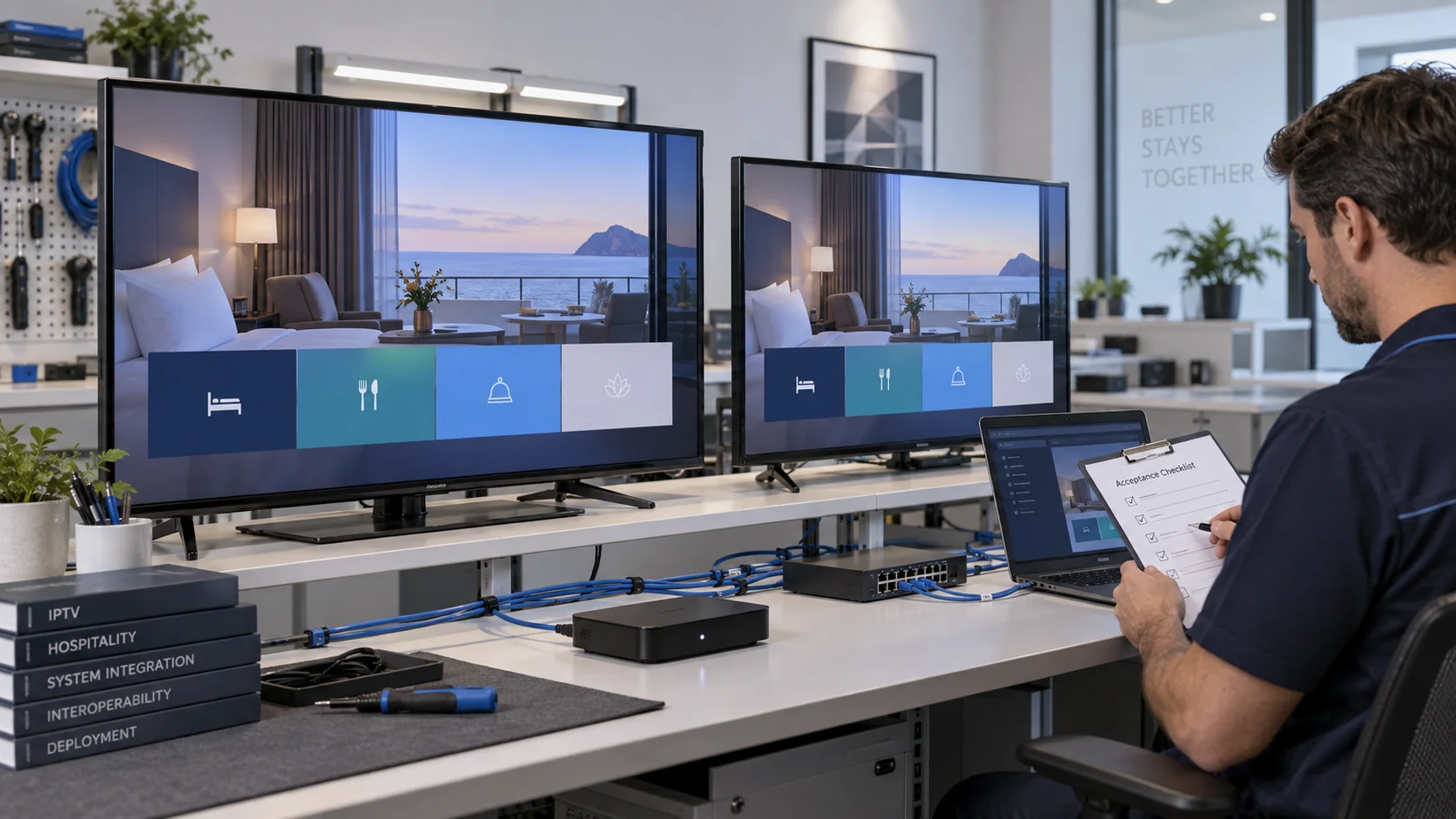
Specify a pilot that represents the property's sources, television families, network segments, and service mix. Agree on the duration and pass conditions before equipment delivery. The hotel should not discover after installation that acceptable startup time, picture quality, or recovery behavior was never defined.
- Verify every approved source with picture, sound, captions where required, and correct channel identification.
- Test the agreed concurrency and peak traffic mix using representative network paths.
- Check endpoint startup, remote operation, channel changes, and recovery after interruption.
- Exercise optional integration workflows with synthetic data and documented failure cases.
- Demonstrate configuration restoration, staff access, and escalation procedures.
Record the exact hardware, software versions, settings, and network topology used for acceptance. Keep screenshots and test logs where useful, but do not confuse an illustrative dashboard with measured evidence. Changes made after the pilot should receive a proportionate regression test.
Prepare the maintenance team
Provide a channel register, endpoint inventory, network map, backup locations, and a fault-isolation procedure. Identify the source provider, network contractor, IPTV supplier, and hotel contacts for escalation. Explain which settings staff can change and which need an engineering review.
Include spare and replacement strategies only where they address a defined recovery requirement. Agree on software update procedures and support scope. A successful handover lets the hotel restore known settings and identify the failing layer without relying on the original installer for every routine channel or room-device issue.
Compare supplier quotations on scope and lifecycle cost
A useful hotel IPTV system supplier checklist makes inclusions and exclusions visible. Request an itemized proposal covering source reception, server functions, endpoint hardware, software licensing, installation, network responsibilities, integration work, content preparation, training, and support. Distinguish one-time charges from recurring services.
Ask whether capacity figures describe registered terminals, simultaneous playback, channel input limits, or a tested combination of services. Request the assumptions behind each figure. Storage needs, transcoding demand, and network delivery may be independent bottlenecks even when the room count is within a catalogue limit.
Keep the procurement brief evidence-based
Attach the endpoint matrix, source inventory, network drawing, service priorities, expansion plan, and pilot checklist to the request for quotation. Ask suppliers to identify unsupported requirements and dependencies in writing. Compare alternatives against the same baseline so that a low price is not simply a smaller or incomplete scope.
For OEM or integrator projects, clarify branding scope, firmware ownership, configuration responsibilities, and support boundaries before accepting delivery. Do not assume that every standard platform includes unrestricted customization. Record agreed changes and acceptance evidence against a named configuration.
Use verified project requirements to request a SOUKA review rather than seeking a universal price per room. A well-defined brief helps separate hardware selection from content, networking, and integration obligations, and provides a practical basis for planning procurement, commissioning, and ongoing operation.
Related Products
Related Solutions
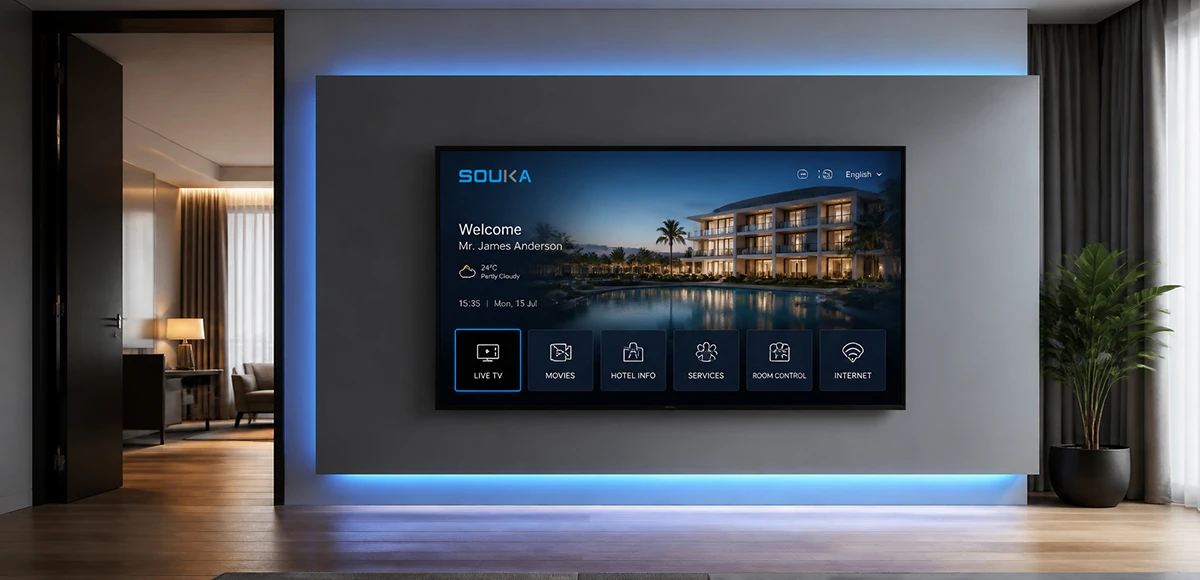
IPTV Solution for Hotels
Deliver lag-free 4K live TV to every guest room, customize your interactive brand interface with zero coding, and automate database workflows. Our carrier-grade Linux streaming matrix bridges natively with global property management systems to eliminate integration friction and slash hardware deployment overhead.
Explore Solutions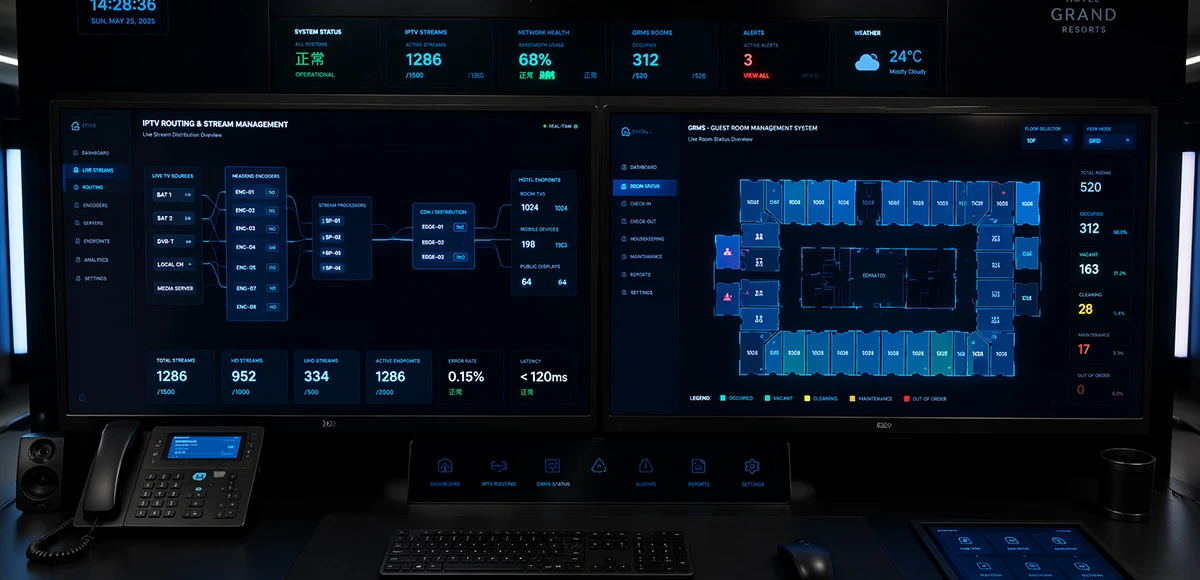
Integrated IPTV & GRMS Solution
Unify carrier-grade 4K IPTV streaming and autonomous RCU room controls into a single, cohesive hospitality IoT architecture. SOUKA bridges interactive in-room entertainment, smart lighting scenes, dynamic HVAC energy optimization, and native PMS database synchronization—slashing hardware CapEx, simplifying structured cabling, and delivering seamless guest experiences.
Explore Solutions
Cable TV Solution for Hotels
Deliver stable live television to every guest room without rebuilding the property network. SOUKA combines multi-source reception, high-density digital or analog modulation, RF combining, amplification, and centralized headend management for new hotels, phased renovations, and legacy coax upgrades.
Explore Solutions
IPTV Solution for Hotels
Deliver lag-free 4K live TV to every guest room, customize your interactive brand interface with zero coding, and automate database workflows. Our carrier-grade Linux streaming matrix bridges natively with global property management systems to eliminate integration friction and slash hardware deployment overhead.
Explore Solutions
Integrated IPTV & GRMS Solution
Unify carrier-grade 4K IPTV streaming and autonomous RCU room controls into a single, cohesive hospitality IoT architecture. SOUKA bridges interactive in-room entertainment, smart lighting scenes, dynamic HVAC energy optimization, and native PMS database synchronization—slashing hardware CapEx, simplifying structured cabling, and delivering seamless guest experiences.
Explore Solutions
Cable TV Solution for Hotels
Deliver stable live television to every guest room without rebuilding the property network. SOUKA combines multi-source reception, high-density digital or analog modulation, RF combining, amplification, and centralized headend management for new hotels, phased renovations, and legacy coax upgrades.
Explore SolutionsFrequently Asked Questions
A typical Hotel IPTV System may include:
- IPTV Headend equipment
- IPTV Streamers
- IPTV Server
- Network switches
- IPTV Set-Top Boxes
- Smart TVs
- Middleware or management software
The final configuration depends on the hotel size, signal sources, number of rooms, and required functions.
Conclusion
A dependable hotel IPTV system starts with a defined service brief and ends with a verified, maintainable deployment. Separate the source, server, network, endpoint, and integration layers; calculate traffic for the real delivery mode; and test the exact television combinations before a property-wide rollout.
Keep commercial decisions tied to the pilot, scope boundaries, and recovery plan. To evaluate a SOUKA configuration, send your room count, TV models, source lineup, network drawing, and required guest services. Those details support a project-specific architecture and quotation, while keeping unverified compatibility or performance assumptions out of the purchase decision.