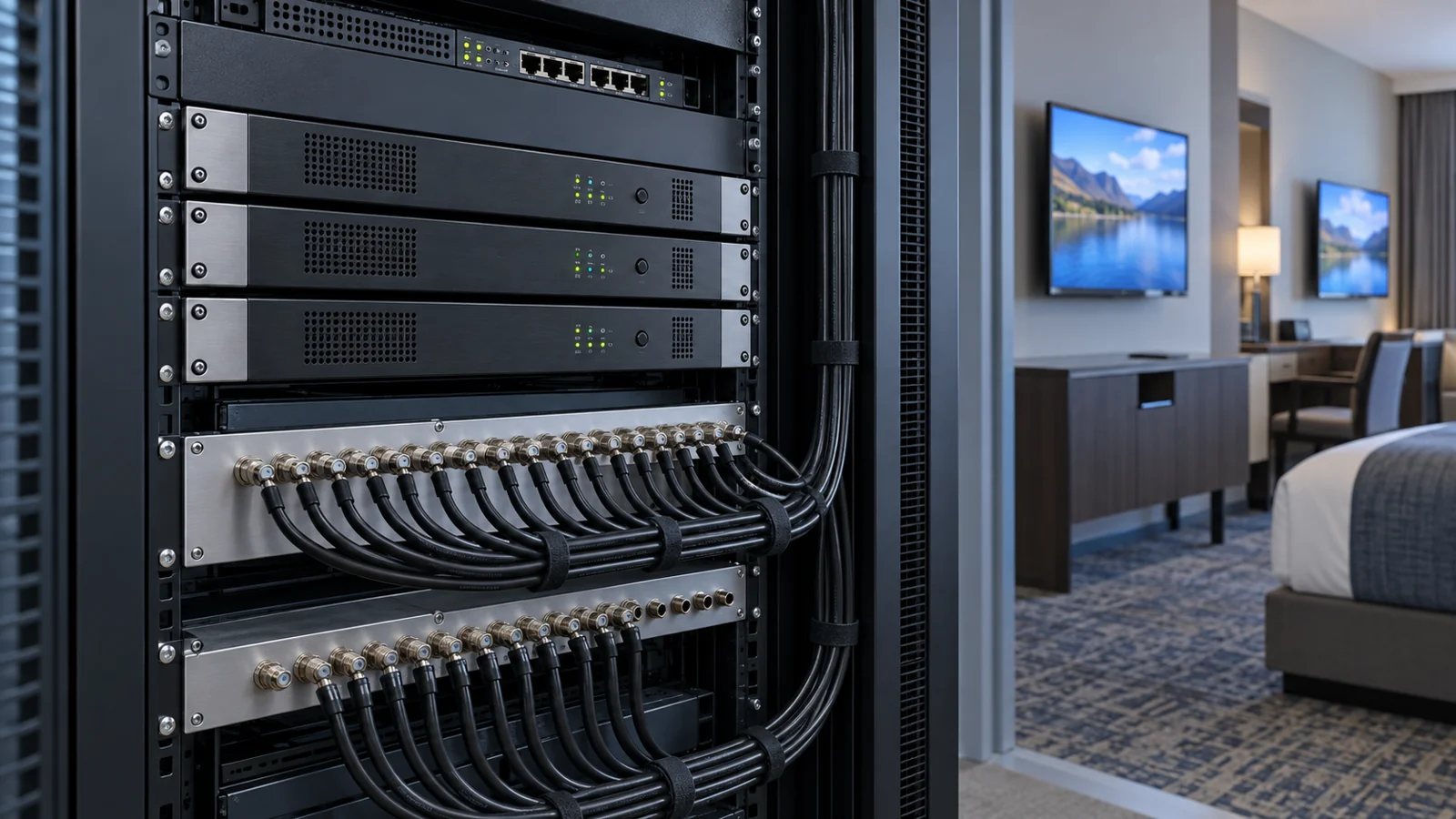
Choosing an HDMI modulator for a hotel is not simply a choice between a small box and a larger rack. It is a decision about how many independent programs you need, how those programs reach the room televisions, and what happens when equipment needs maintenance. A compact single-channel design can be sensible for a local information channel. A multi-channel platform can simplify a larger lineup, but it also concentrates shared resources.
This guide compares the two approaches for hotel operators, system integrators, distributors, and OEM buyers. It focuses on architecture, expansion, and service continuity rather than repeating a general equipment checklist. The examples are planning scenarios, not performance claims for a particular model; the final configuration must be checked against your sources, TV fleet, and coax network.
What does channel count mean in an HDMI modulator?
Before comparing quotations, define four different quantities: HDMI inputs, independently encoded programs, RF output carriers, and receiving televisions. Suppliers sometimes use the word channel for more than one of these. An apparently cheaper eight-channel quotation may therefore describe a different capability from another eight-channel proposal.
An HDMI input receives a source such as an authorized receiver or hotel information player. Encoding turns that source into a digital program. One or more programs may be carried within an RF multiplex, depending on the equipment and configuration. The room television must support the output standard and decode the transmitted video and audio. None of these counts is the same as the number of guest rooms.
Write the requirement as a signal chain
For example, a hotel might need six independent live programs and one information program for the same lineup throughout the building. The starting requirement is seven simultaneous source programs, not seven rooms and not automatically seven RF carriers. If two areas need different lineups, record that distribution requirement separately.
Ask each bidder to state input count, simultaneous encoding capacity, program-to-carrier mapping, and any optional modules or licenses. Use the SOUKA cable TV modulator range as the commercial starting point, then compare specific configurations against that written requirement. Our broader HD modulator buying guide for hotels covers the wider source-to-TV compatibility checks.
Single-channel versus multi-channel: compare the whole system
A single channel HDMI modulator usually serves one independently encoded source, although the exact RF behavior still needs confirmation. Several individual units can form a larger headend. A multi-channel HDMI modulator brings multiple inputs into one platform; that platform may be an integrated appliance or a modular chassis. These are different maintenance arrangements, so do not treat every rack-mounted product as equivalent.
| Decision | Separate single-channel units | Multi-channel platform |
|---|---|---|
| Initial scope | Useful for a small addition or staged project | Useful when several simultaneous sources are already defined |
| Expansion | Add units, subject to combining and network capacity | Add supported modules or use spare inputs; verify shared limits |
| Maintenance | Individual units can often be isolated | Impact depends on module, chassis, power, and control design |
| Rack and wiring | More separate power supplies and interconnections | Potentially fewer separate devices; cooling still matters |
| Management | May involve several configuration sessions | May centralize configuration; confirm the actual management scope |
| Cost comparison | Include mounting, combining, labor, and spares | Include installed modules, licenses, and recovery arrangements |
There is no universal input count at which one architecture becomes better. Local support, rack space, expansion timing, and downtime tolerance can outweigh the purchase price difference. Obtain two complete bills of materials for the same channel lineup and acceptance criteria. Otherwise, a quotation that omits a combiner, spare module, or management feature can appear competitive without delivering the same system.
When separate single-channel units make sense
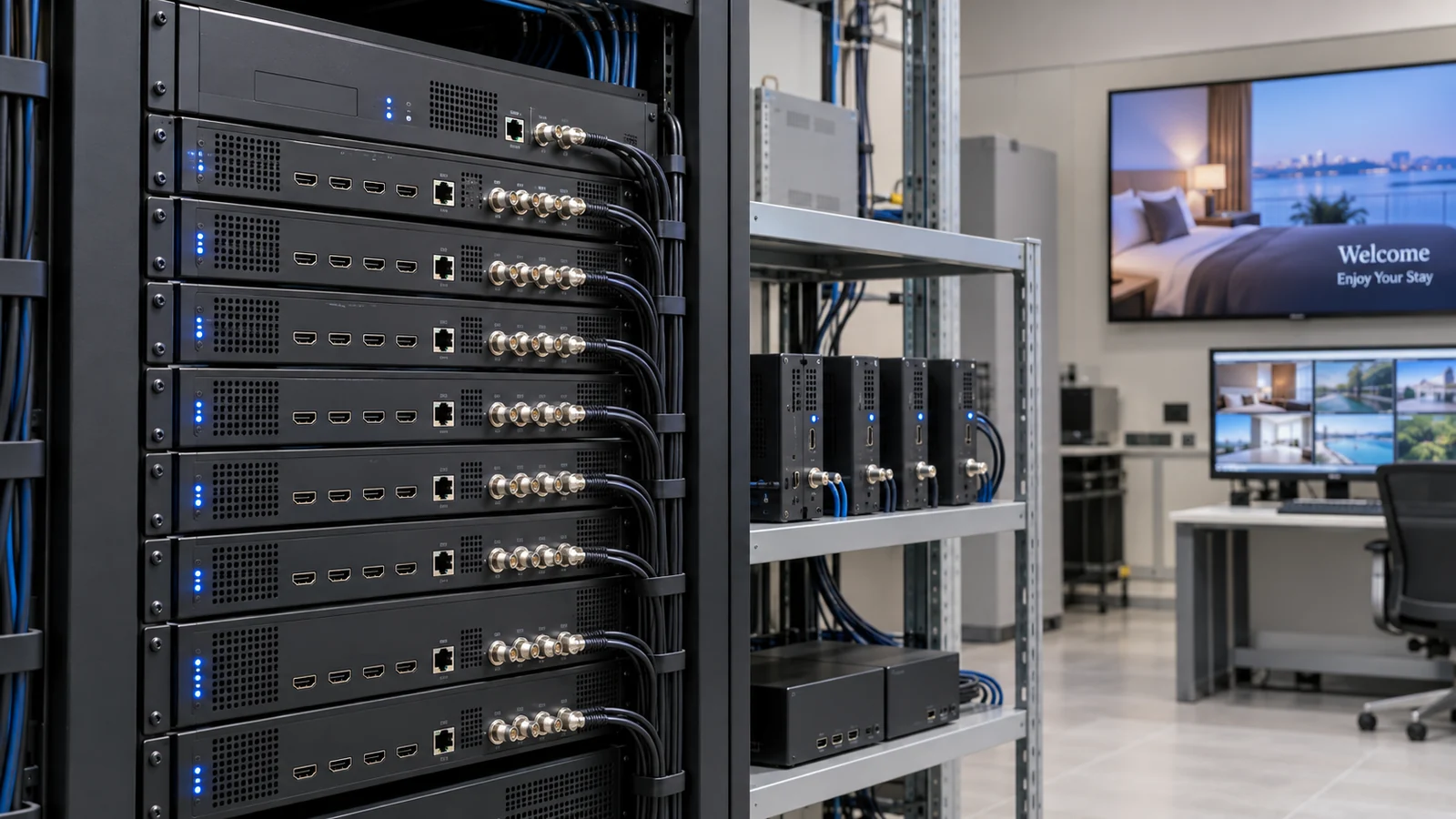
Consider separate units when the immediate task is limited and the existing headend is already reliable. Adding one hotel welcome channel, an event feed, or a locally produced information service does not necessarily justify replacing the entire platform. The new carrier must still fit the existing frequency plan and remain compatible with the installed televisions.
Keep the scope genuinely independent
A useful modular addition has a clearly identified source, its own configuration record, and a documented connection into the distribution chain. Label the source and RF path so staff can remove the addition without disturbing established services. Confirm whether an advertised RF loop function meets your actual combining requirement; do not assume it is a substitute for an engineered distribution design.
Separate equipment can also support gradual investment where future programs are uncertain. However, repeated small additions may create a difficult rack: multiple power adapters, inconsistent firmware, more cable joints, and several management interfaces. Count those operating tasks before making staged expansion the default.
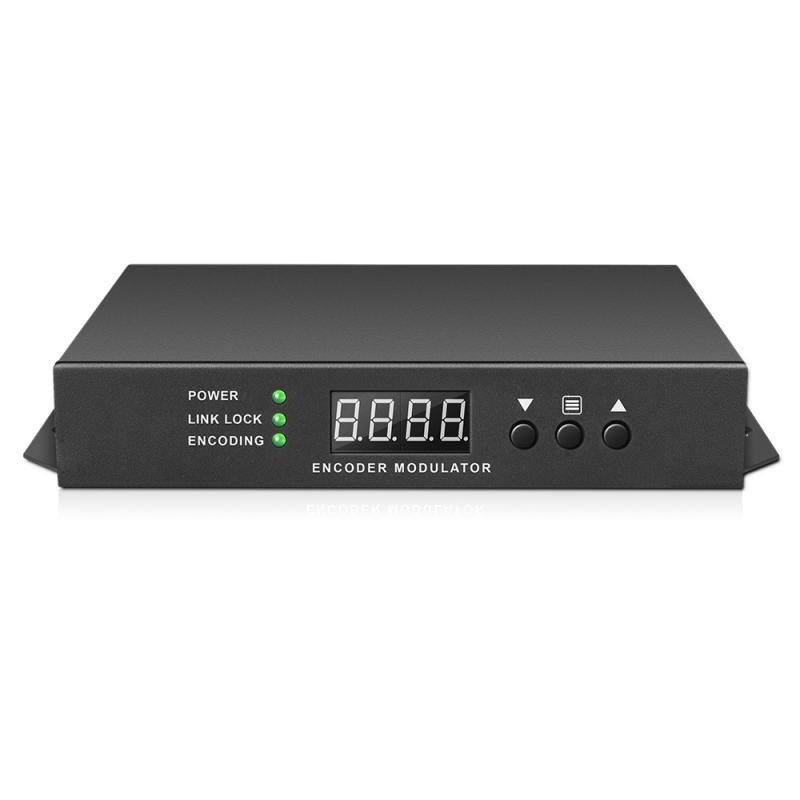
The encoder modulator with HD and RF loop is one configuration to review for a localized source requirement. Confirm its ordered input and output mode, supported formats, and recovery behavior before selection. Product names describe a family or feature set, not proof that a unit will interoperate with every source device.
If the project already requires many new programs, compare the cost of maintaining separate units with a consolidated platform before proceeding. A small initial hardware saving may disappear after installation and service visits are included.
When a multi-channel hotel headend is the better fit
A multi-channel approach becomes attractive when the source lineup is defined and several programs must be managed together. Consolidation can reduce separate enclosures and simplify configuration records. It can also provide a clearer path for a new-build hotel or a planned replacement of an aging headend.
Distinguish integrated and modular designs. An integrated unit may offer a fixed number of inputs in a compact enclosure. A modular chassis may offer different cards or expansion positions, but empty slots do not guarantee that power, processing, output capacity, or licenses are available for every combination. Ask for the supported configuration matrix and the exact populated bill of materials.
Separate convenience from resilience
A single management interface can simplify work, but a shared power supply, controller, or output stage can affect several programs at once. Conversely, multiple stand-alone units may still share a single upstream source switch or building power circuit. Map common dependencies before describing either design as redundant.
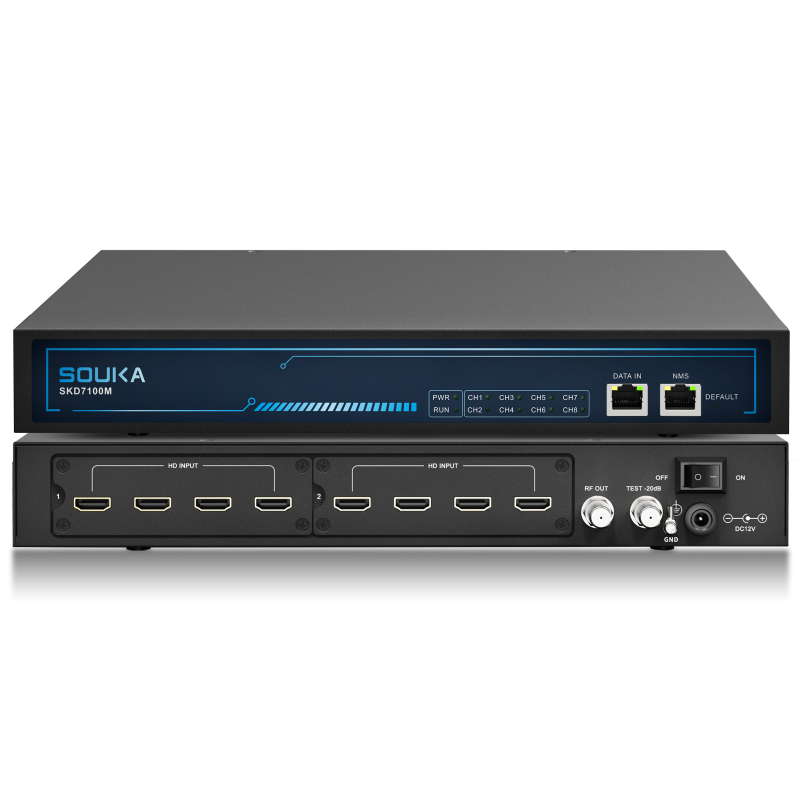
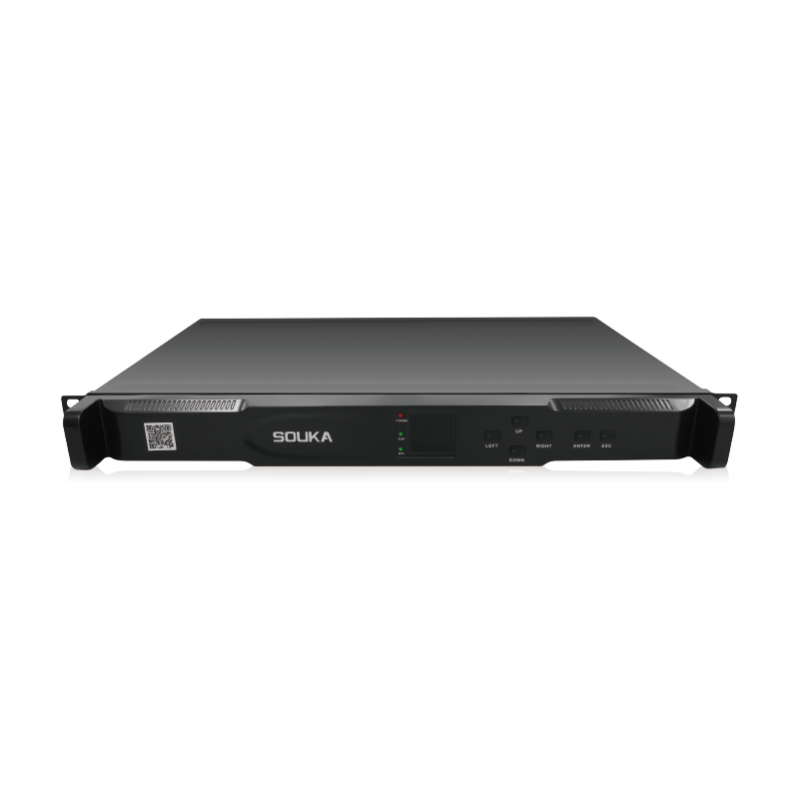
For an initial comparison, review the 4 or 8 IN 1 HD encoder modulator and the 12 IN 1 digital modulator with IP and RF output. They illustrate different platform sizes; they should not be treated as interchangeable. Request a recommendation based on required sources, RF standard, codec support, and expansion rather than selecting the largest number in a product title.
Where content already arrives as IP streams, also ask whether a separate HDMI conversion step is necessary. The correct architecture starts with the actual source interfaces, not a preferred equipment label.
Plan expansion in programs, carriers, and physical resources
Expansion has several limits that must be checked together. Spare HDMI inputs are useful only if the platform can encode the additional sources, carry their programs in the available RF outputs, and fit them into the building's frequency plan. A design can have unused sockets and still lack usable output capacity.
A practical seven-program planning example
Assume a hotel initially needs six live sources and one information player. Its brief should list seven simultaneous programs, the expected video and audio formats, the TVs to be served, and the intended later additions. If two more independent sources are planned, request a nine-program expansion proposal as well as the initial seven-program quotation.
Do not translate that example directly into a number of carriers. Carrier capacity depends on the selected standard, modulation parameters, encoding choices, and equipment mapping. Ask the supplier for a program-to-multiplex schedule and an explanation of its operating headroom. Use demanding moving content to confirm acceptable quality at the proposed settings.
- Signal resources: input support, simultaneous encoding, multiplex capacity, and RF outputs.
- Physical resources: rack units, power distribution, ventilation, cable routing, and access for replacement.
- Operational resources: configuration tools, backup files, trained staff, and stocked spares.
Record which expansion work requires an outage, a replacement chassis, or a TV rescan. Expansion that looks simple on a quotation may be disruptive during hotel operation. Agree these details while comparing digital TV modulator configurations, not after every guest room is occupied.
Validate HDMI sources before approving either architecture
Both designs can fail at the source interface even when their RF outputs are correctly configured. Record the exact source model, output resolution and frame rate, audio format, and normal restart behavior. A successful test with a laptop does not demonstrate compatibility with every receiver or media player in the final installation.
Check EDID and recovery behavior
EDID helps a connected source determine supported display capabilities. As explained in Extron's EDID overview, problems in that exchange can lead to inappropriate formats or missing pictures. Confirm the modulator's supported input modes and any documented EDID settings. Then repeat the test after disconnecting the HDMI cable, restarting the source, and cycling power in different orders.
Also separate interface compatibility from content permission. Digital Content Protection's HDCP guidance explains the protection framework associated with protected digital content. Do not buy an HDMI-to-RF system on a promise that it will bypass copy protection. Obtain an authorized distribution arrangement and have the supplier confirm supported protected-content workflows for the intended sources.
For audio, test the actual source settings across representative TVs, including the oldest models remaining in service. Verify that audio returns after source changes and restarts. Record the successful settings instead of leaving sources in an automatic mode that has not been tested. These checks apply equally to a single-channel addition and a high-density chassis; more inputs do not remove compatibility requirements.
Define failure impact and the replacement procedure
Ask a simple operational question: which programs disappear if one component stops working? Draw the dependencies between sources, encoders, power supplies, control modules, combiners, amplifiers, and building distribution. This reveals failures shared by both architectures and avoids overstating the protection offered by individual units.
Specify the failure you intend to cover
A spare single-channel unit may help restore one failed source path, provided staff can load its configuration and reconnect it correctly. A spare card may help a modular system only if the chassis remains functional and the replacement procedure is supported. Neither measure automatically covers loss of a shared source, amplifier, mains supply, or distribution cable.
Request a written replacement sequence: isolate the fault, identify the approved spare, restore settings, confirm output level and channel identity, and test a room television. Ask whether the procedure changes service identifiers or channel ordering. If a rescan is required, include room access and guest disruption in the maintenance plan.
Record permitted service windows and the people authorized to change configurations. Keep a known-good backup separate from the running equipment, with firmware and hardware versions. For repeat installations, maintain a project-specific baseline rather than applying another hotel's settings without checking frequencies and television compatibility.
The procurement decision should reflect acceptable outage impact and realistic restoration time, not an unsupported uptime percentage. Discuss those requirements within the Cable TV Solution for Hotels so the headend and distribution design are assessed together.
Compare lifetime cost and run a representative pilot
Build a comparison that includes the full installed scope. For separate units, count mounting, power supplies, combining, interconnects, configuration time, and spare equipment. For a consolidated platform, count installed cards, optional functions, licenses where applicable, replacement arrangements, and any chassis-level dependency. Ask suppliers to identify excluded items explicitly.
A pilot should reproduce the intended system closely enough to expose weak assumptions. Use the actual sources and at least one television from each installed model family. Include the proposed combining chain and representative high-loss outlets. Do not approve a large purchase solely from a clear picture on a bench monitor connected directly to one unit.
- Source test: verify every required source format, audio mode, and restart sequence.
- Loaded-system test: enable the full planned lineup and check output quality and representative room reception.
- Guest-use test: scan channels, check ordering, power-cycle TVs, and switch repeatedly between services.
- Service test: restore a saved configuration and rehearse a supported replacement procedure.
Agree acceptance limits using the proposed equipment specifications and the engineered RF design. Record source settings, firmware, carrier configuration, measured outlet results, and observed faults. A failed test should produce a reproducible issue list rather than an informal impression.
If the hotel's real requirement includes interactive menus or guest services beyond linear television, compare the architecture with an IPTV solution for hotels before freezing the procurement brief. The cheapest headend is not economical if it cannot deliver the agreed guest experience.
Keep channel identities stable during a staged upgrade
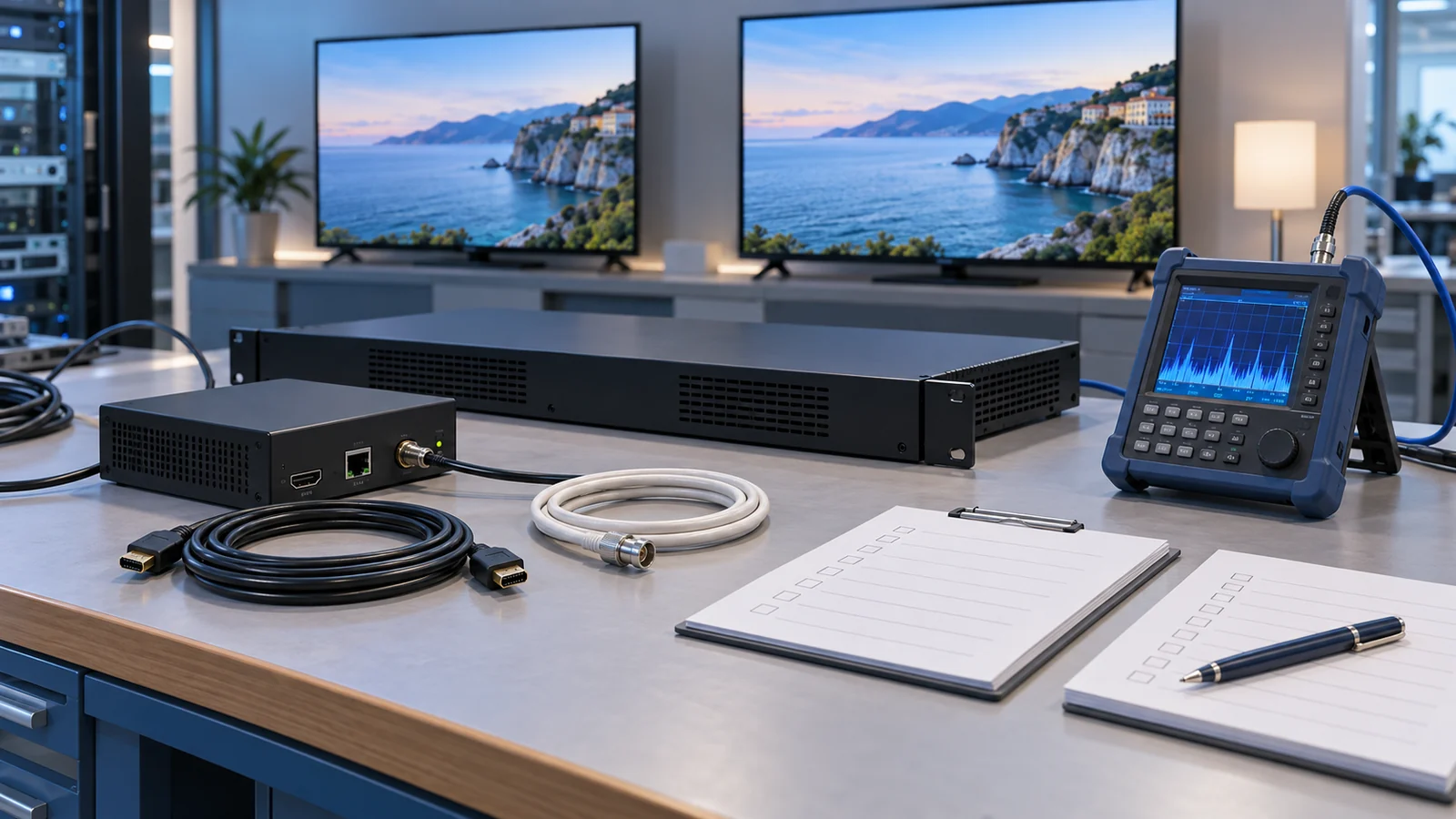
A staged hotel upgrade needs a channel-management plan as well as new equipment. Record the existing service names, tuning information, and guest-facing channel order before replacing any source path. Ask which identifiers the proposed equipment can retain and how the installed televisions interpret them. A technically successful RF replacement can still create support calls if guests suddenly find familiar programs under different numbers.
Prepare a change sheet for each stage showing the old source, new source, RF assignment, affected services, and rollback connection. Make one controlled change at a time where practical. Check a representative room before moving on, and keep the previous working settings available until the agreed acceptance checks are complete.
For multiple hotel sites, use a common document structure but preserve site-specific configuration. Different television fleets, channel rights, and distribution components can require different settings. Copying a headend configuration without checking these differences can introduce frequency conflicts or unsupported formats.
Finally, assign ownership of the channel register and update it after approved changes. The hotel's operating team should know who maintains source subscriptions, who supports the headend, and who diagnoses room-outlet faults. Clear responsibility helps either architecture remain manageable after the installer has left.
Prepare an RFQ that lets suppliers compare like for like
Send the same design brief to every bidder. Include the destination market, source inventory, initial and future program counts, TV models, required output standard, coax survey, rack constraints, and service expectations. Ask for a named configuration rather than an unspecified product family.
For OEM and distributor orders, add sample approval, configuration locking, labeling, documentation language, spare-part availability, and repeat-order control. Distinguish branding services from technical changes: a customized front panel does not establish that a new source format or RF mode has been validated.
- Which programs, inputs, and RF outputs are included in the quoted configuration?
- Which functions are optional, and what must be added for the next expansion stage?
- What is the impact of a unit, card, controller, or power failure?
- Which exact source and television combinations will be tested before approval?
- What records, backups, spares, and support arrangements are included at handover?
SOUKA can review the required architecture against its headend and modulation product range. Use that review to confirm a suitable configuration and a test plan; do not infer guaranteed compatibility from a general category description. A clear brief makes price comparisons more meaningful and reduces the risk of discovering missing interfaces or service requirements during installation.
Related Products
Related Solutions
Cable TV Solution for Hotels
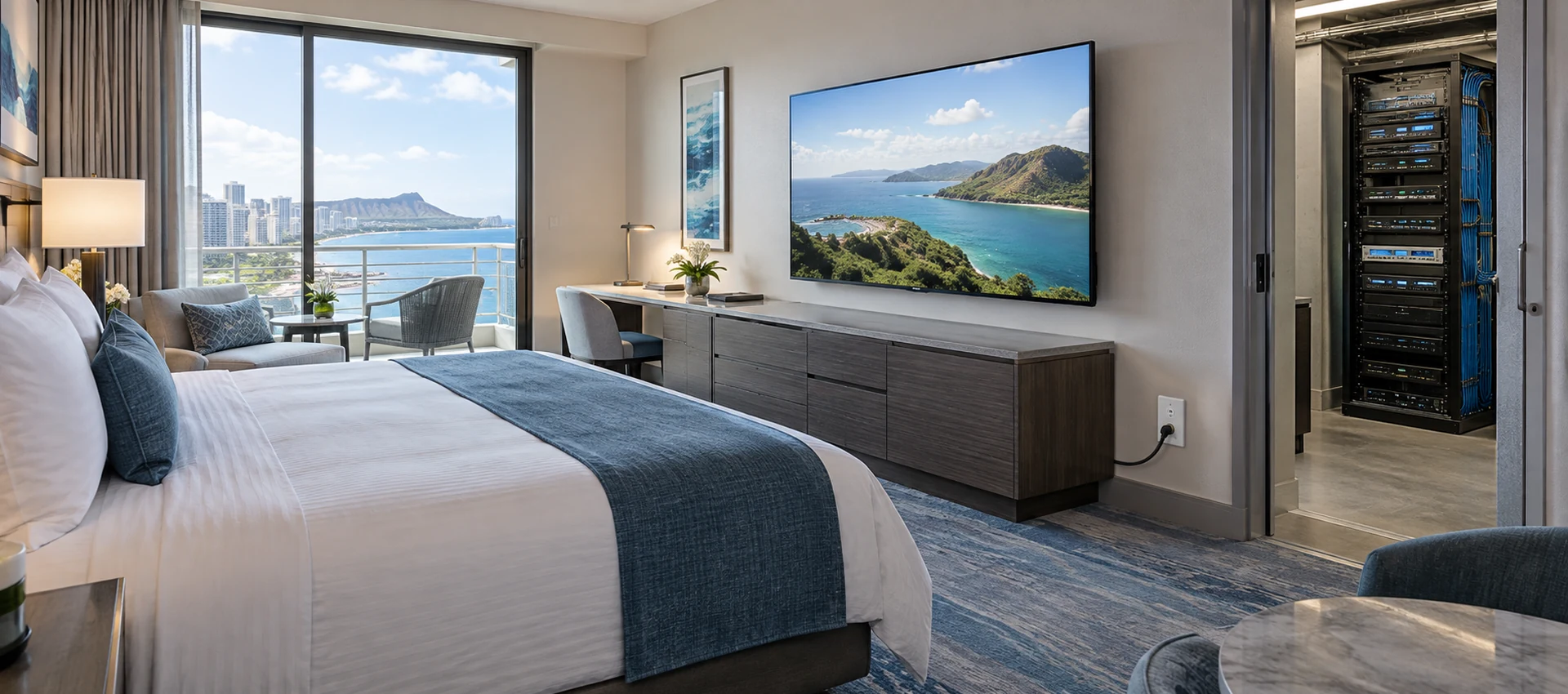
Deliver stable live television to every guest room without rebuilding the property network. SOUKA combines multi-source reception, high-density digital or analog modulation, RF combining, amplification, and centralized headend management for new hotels, phased renovations, and legacy coax upgrades.
Explore Solutions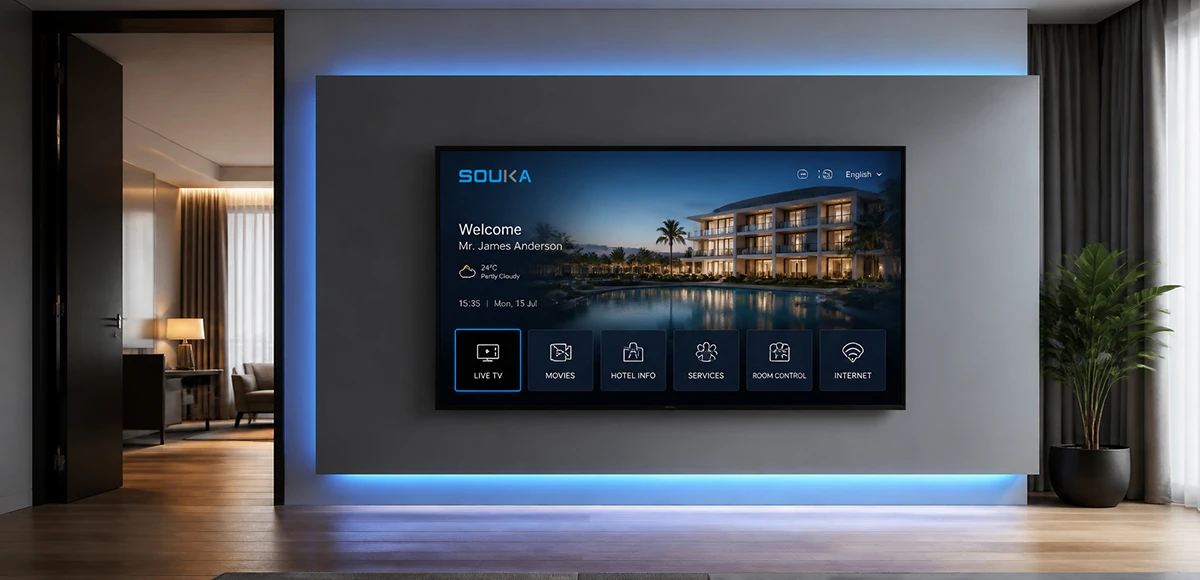
IPTV Solution for Hotels
Deliver lag-free 4K live TV to every guest room, customize your interactive brand interface with zero coding, and automate database workflows. Our carrier-grade Linux streaming matrix bridges natively with global property management systems to eliminate integration friction and slash hardware deployment overhead.
Explore Solutions
Cable TV Solution for Hotels
Deliver stable live television to every guest room without rebuilding the property network. SOUKA combines multi-source reception, high-density digital or analog modulation, RF combining, amplification, and centralized headend management for new hotels, phased renovations, and legacy coax upgrades.
Explore Solutions
IPTV Solution for Hotels
Deliver lag-free 4K live TV to every guest room, customize your interactive brand interface with zero coding, and automate database workflows. Our carrier-grade Linux streaming matrix bridges natively with global property management systems to eliminate integration friction and slash hardware deployment overhead.
Explore SolutionsFrequently Asked Questions
Conclusion
Choose a single-channel HDMI modulator when a limited, well-defined addition benefits from independent equipment. Choose a multi-channel HDMI modulator when consolidation, planned capacity, and centralized operation fit the project. In either case, define inputs, programs, carriers, and rooms separately, verify source-to-TV compatibility, and document how service will be restored after a fault.
For a project-specific comparison, send SOUKA your source list, TV models, and expansion plan. Request the initial and future configurations, a complete bill of materials, and a representative pilot before committing to deployment.