

what are you looking for?
Comparative Analysis of Hotel SIP Phone Systems vs. VoIP Phone Systems

In hotel operations, the phone system is a critical infrastructure component for ensuring service efficiency and customer experience. Communication for room service, front desk responsiveness, and inter-departmental collaboration all rely on stable and efficient communication support. With advancements in communication technology, hotel phone systems have transitioned from traditional Private Branch Exchanges (PBX) towards IP-based solutions, with SIP phone systems and VoIP phone systems emerging as the current mainstream choices. Although both fall under the umbrella of IP communications, they exhibit significant differences in technical principles, functional characteristics, and applicable scenarios. Making a rational choice can not only reduce operational costs but also enhance the hotel's service quality and management efficiency.
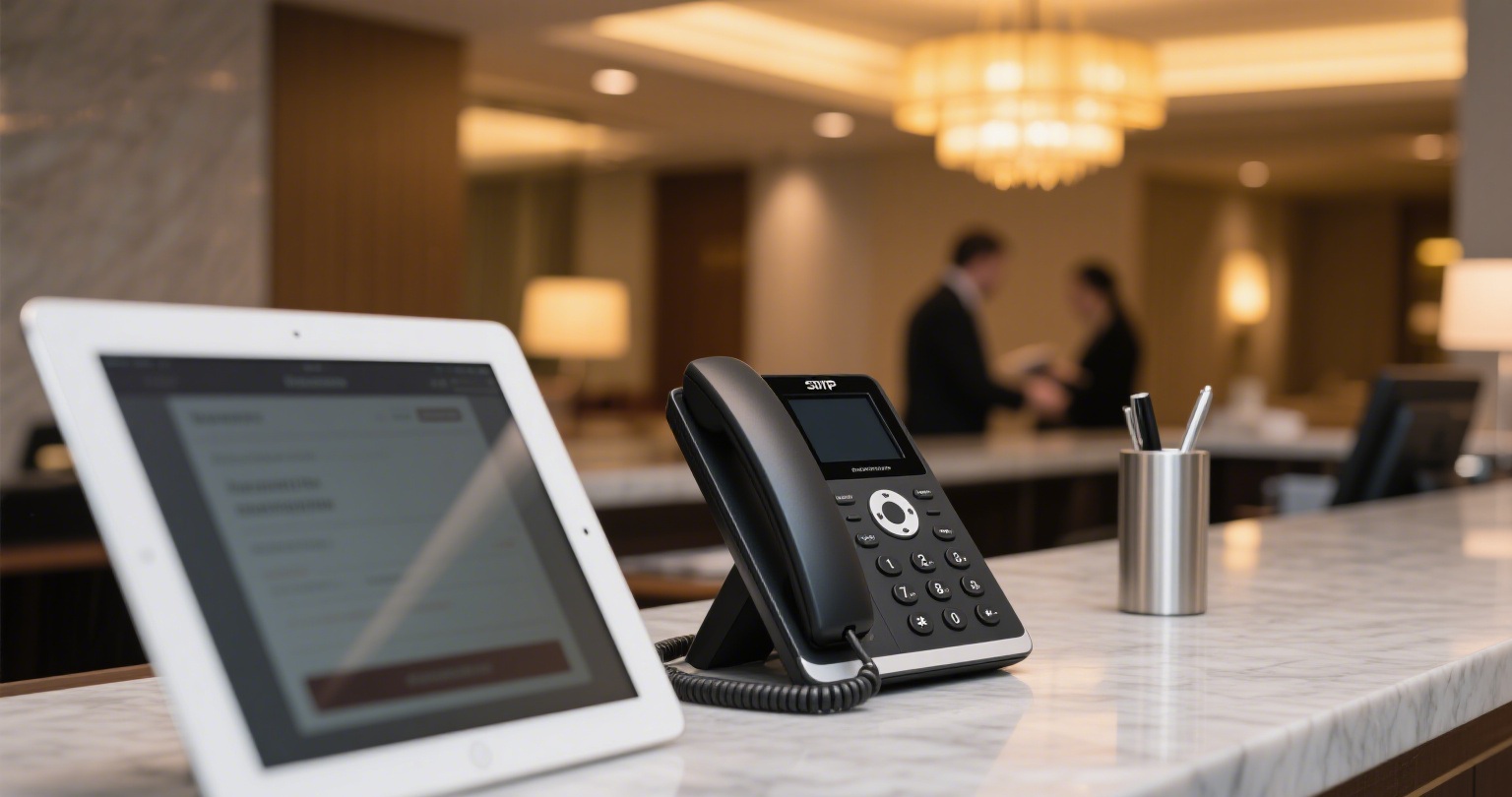
SIP (Session Initiation Protocol) phone systems facilitate communication over IP networks, with the core function of establishing, managing, and terminating voice sessions using a standardized protocol. Their application in the hotel context demonstrates distinct characteristics. From a technical architecture perspective, SIP systems adopt a modular design, allowing flexible integration with existing hotel software such as the Property Management System (PMS) and Customer Relationship Management (CRM) system. This enables automatic synchronization of guest room information and phone permissions – for instance, automatically activating a room phone's external line dialing permission upon guest check-in and deactivating it upon check-out, eliminating the need for manual intervention by front desk staff and significantly reducing repetitive tasks.
In terms of functional adaptability, SIP phone systems can precisely meet the service scenario requirements of hotels. For room service, the system can be configured with "one-touch call" functions; a guest pressing the "Service" button on the room phone can directly connect to the housekeeping center without memorizing extension numbers. Simultaneously, it supports integration between voicemail and the in-room television (TVS) system – when a guest is not in the room, missed call notifications or voicemail alerts can be displayed via pop-up messages on the TV screen, enhancing information delivery efficiency. For hotel conference scenarios, SIP systems support multi-terminal access; whether it's a fixed phone in the meeting room, a staff member's mobile phone, or a participant's computer, all can join conference calls via the SIP protocol. Features like call recording and automatic meeting minute generation can also be implemented, meeting the needs of business guests.
Stability and compatibility are another major advantage of SIP phone systems. These systems support a combined model of on-premises deployment and cloud backup. Even if the hotel's local network experiences a brief failure, the cloud backup system can quickly take over communication services, ensuring uninterrupted phone service in guest rooms and front desk hotlines. Furthermore, the SIP protocol is highly compatible and can integrate with existing hotel systems like access control and surveillance systems – for example, a guest calling the front desk via the room phone to request door unlocking; after identity verification, front desk staff can remotely authorize the access control system to unlock the door directly through the phone system, enhancing service convenience.
From a cost perspective, SIP phone systems offer higher long-term cost-effectiveness. During deployment, they can utilize the hotel's existing Local Area Network (LAN) cabling, eliminating the need for dedicated telephone line installation and reducing initial setup costs. In later maintenance, the modular design enables more precise fault identification and troubleshooting without requiring full system shutdowns, reducing maintenance costs and service disruption time. Additionally, SIP systems support scalable expansion; when a hotel adds rooms or expands floors, it only requires adding corresponding SIP terminal devices and simple configuration to quickly integrate them into the existing system, avoiding large-scale infrastructure upgrades.
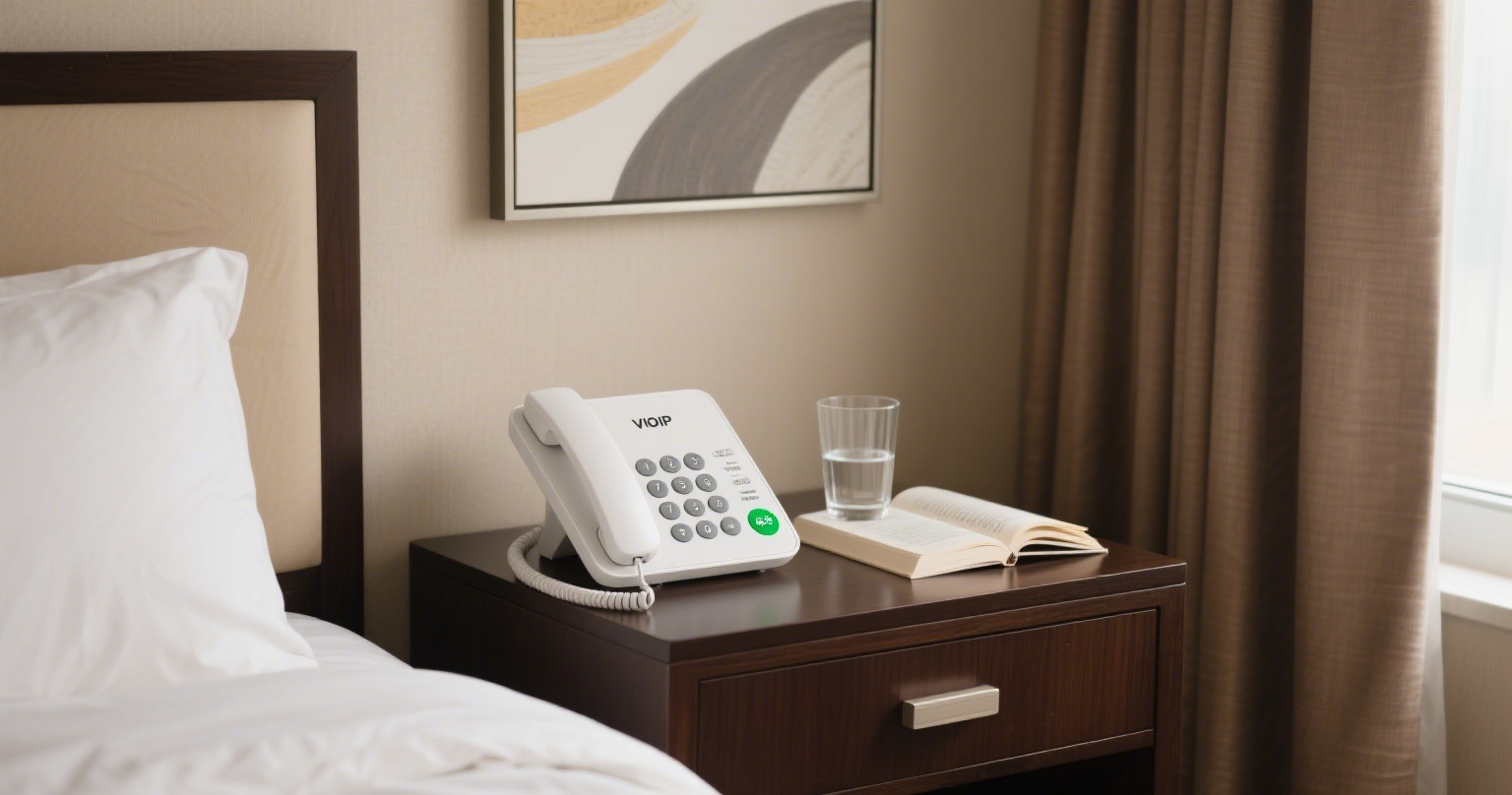
VoIP (Voice over Internet Protocol) systems transmit communication by converting analog voice signals into digital data packets for transmission over IP networks. Their core advantage lies in leveraging the public internet, breaking geographical limitations, making them more suitable for hotel brands with chain operations or multiple branches.
In cross-regional communication, VoIP phone systems excel. For chain hotels, communication between headquarters and various branches can be achieved free of charge via the VoIP system, whether for daily operational communication, staff training sessions, or emergency coordination, eliminating long-distance call charges and significantly reducing cross-regional communication costs. Simultaneously, VoIP systems support "Find Me/Follow Me" or "One Number" features; hotel staff can bind their work extensions to personal mobile phones, allowing them to answer work calls even when not on the hotel premises, ensuring uninterrupted service response – for instance, a night manager away from the desk can still promptly answer guest inquiry calls transferred from the front desk.
Flexibility and mobility are core characteristics of VoIP systems. These systems do not rely solely on fixed hardware terminals; staff can use computers, tablets, mobile phones, and other devices with installed software clients to enable call functionality. During peak hotel periods, such as high tourist seasons or large conference receptions, front desk staff can use laptops at temporary service points to access the VoIP system, quickly opening temporary service hotlines to alleviate front desk pressure. Moreover, VoIP systems support virtual extension assignments; hotels can assign virtual extensions to mobile staff like housekeepers and maintenance personnel, enabling them to receive work instructions via their mobile phones without frequently returning to the office to check for messages, thereby improving work efficiency.
VoIP phone systems offer significant advantages in cost control, especially suitable for hotels with limited budgets or those focusing on short-term benefits. System deployment does not require extensive dedicated hardware equipment; initial investment focuses mainly on software licensing and network bandwidth upgrades. For small and medium-sized or economy hotels, this effectively reduces initial capital expenditure. Furthermore, call costs for VoIP systems are considerably lower than traditional landline services, especially for international long-distance calls. For hotels hosting a significant number of international guests, this can substantially reduce guest long-distance call expenses, enhancing guest satisfaction.
Regarding functional expandability, VoIP systems emphasize the integration of basic communication and convenient services. They support basic features like voicemail, caller ID, and call forwarding, and can integrate with the hotel's booking system – when a guest books a room via the hotel website or a third-party platform, the VoIP system can automatically send a confirmation SMS to the guest's mobile phone, including the hotel's service hotline VoIP number for future inquiries. Additionally, VoIP systems support Interactive Voice Response (IVR) functionality; guests calling the main hotel number can navigate directly to the required service via voice prompts (e.g., "Press 1 for Front Desk, Press 2 for Room Service, Press 3 for Restaurant Reservations"), reducing manual transfer steps and improving service efficiency.
When choosing between SIP and VoIP phone systems, hotels need to make a comprehensive judgment based on their specific business model, service requirements, network conditions, and other factors, rather than blindly pursuing technological advancement or low cost alone.
Considering hotel scale and business model, independently operated mid to high-end hotels are generally better suited for SIP phone systems. These hotels typically require high communication stability and strong integration with local on-site services. The on-premises deployment model of SIP systems ensures communication services are unaffected by public internet fluctuations, and their integration with local systems like PMS and access control better meets guest demands for high-quality service. Conversely, for chain hotels or brands with multiple branches, the cross-regional communication advantages and low-cost characteristics of VoIP systems align better with their operational needs, helping headquarters achieve efficient management and cost control across properties.
Network conditions are a critical prerequisite influencing the system choice. SIP phone systems demand higher network stability, requiring the hotel to have a robust independent LAN with sufficient bandwidth to ensure low-latency, jitter-free voice transmission. If the hotel's network infrastructure is relatively weak and difficult to upgrade in the short term, opting for a (public internet-based) VoIP system requires caution to avoid call quality degradation due to network instability, negatively impacting the guest experience. Conversely, if the hotel already has a high-speed, stable internet connection and emphasizes staff mobility and remote work needs, the flexibility of VoIP systems can be more beneficial.
Service requirements and cost budget must also be considered. If the hotel primarily targets business guests and needs to provide premium services like conference calling, voicemail-to-TV integration, etc., the functional adaptability of SIP systems is superior. If the hotel operates on an economy model, focusing on basic communication functions and cost control, the low initial investment and low call costs of VoIP systems are more aligned with its needs. Simultaneously, hotels need to evaluate long-term operational costs – SIP systems typically involve higher initial investment but lower maintenance and expansion costs later; VoIP systems have lower initial setup costs but require ongoing expenses for internet bandwidth and software upgrades over the long term. The choice should align with the hotel's financial planning.
SIP phone systems and VoIP phone systems are not mutually exclusive but rather complementary solutions, each emphasizing different aspects and suited to different scenarios. SIP systems are characterized by strong stability, excellent integration with local services, and high long-term cost-effectiveness, making them suitable for independently operated, mid to high-end hotels focused on service quality and local system integration. VoIP systems offer advantages like low cross-regional communication costs, high flexibility, and low initial investment, making them more suitable for chain-operated hotel brands focused on mobility and cost control.
When making a selection, hotels should start from their actual needs, comprehensively evaluating their business model, network conditions, service positioning, and cost budget. If necessary, a hybrid model can be adopted – for example, using SIP systems for core services like room phones and front desk hotlines to ensure stability, while utilizing VoIP systems for mobile staff and external services to enhance flexibility. By leveraging the complementary strengths of both systems, hotels can achieve the optimal balance between communication service efficiency and cost, ultimately providing guests with more superior and convenient services and enhancing the hotel's core competitiveness.


