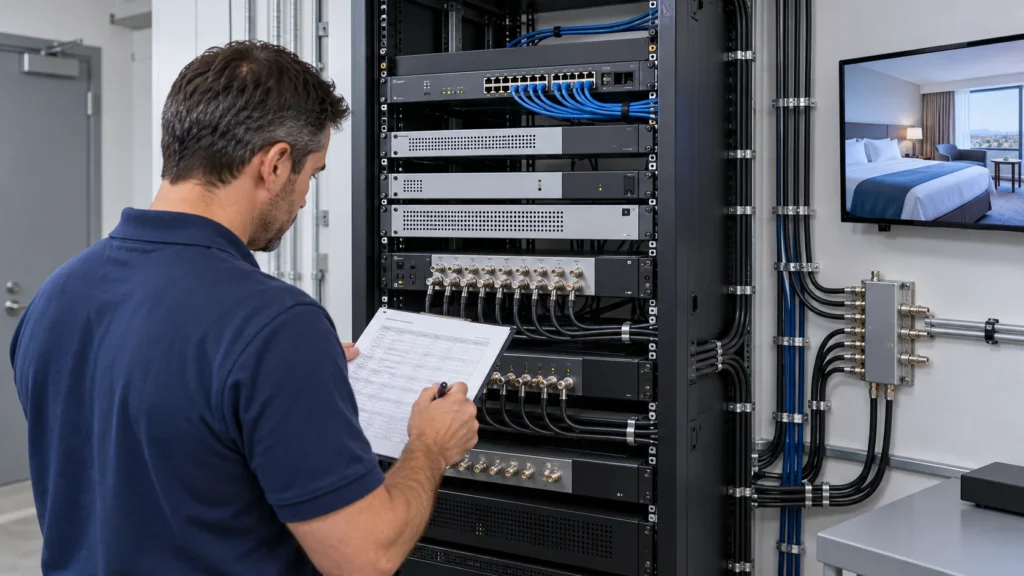
Start with the hotel receiver inventory, not the standard name
A DVB-T2 modulator is suitable for a hotel only when the installed televisions or set-top boxes can receive its configured RF signal and decode the programmes carried inside it. A newer transmission standard does not automatically make every guest-room television compatible, increase the number of source inputs, or repair a weak coaxial distribution network.
For hotel engineers, AV integrators and B2B buyers, the decision starts with the receiver inventory and ends with documented room tests. This guide compares DVB-T, DVB-T2 and DVB-C as practical headend choices: what to put in the quotation, how to estimate useful capacity, and what to prove before accepting the system.
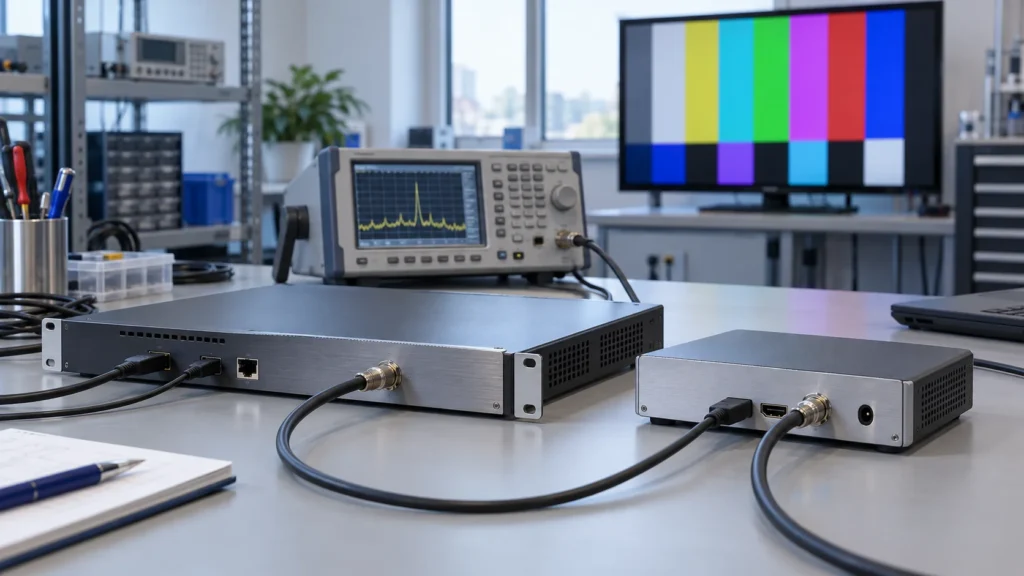
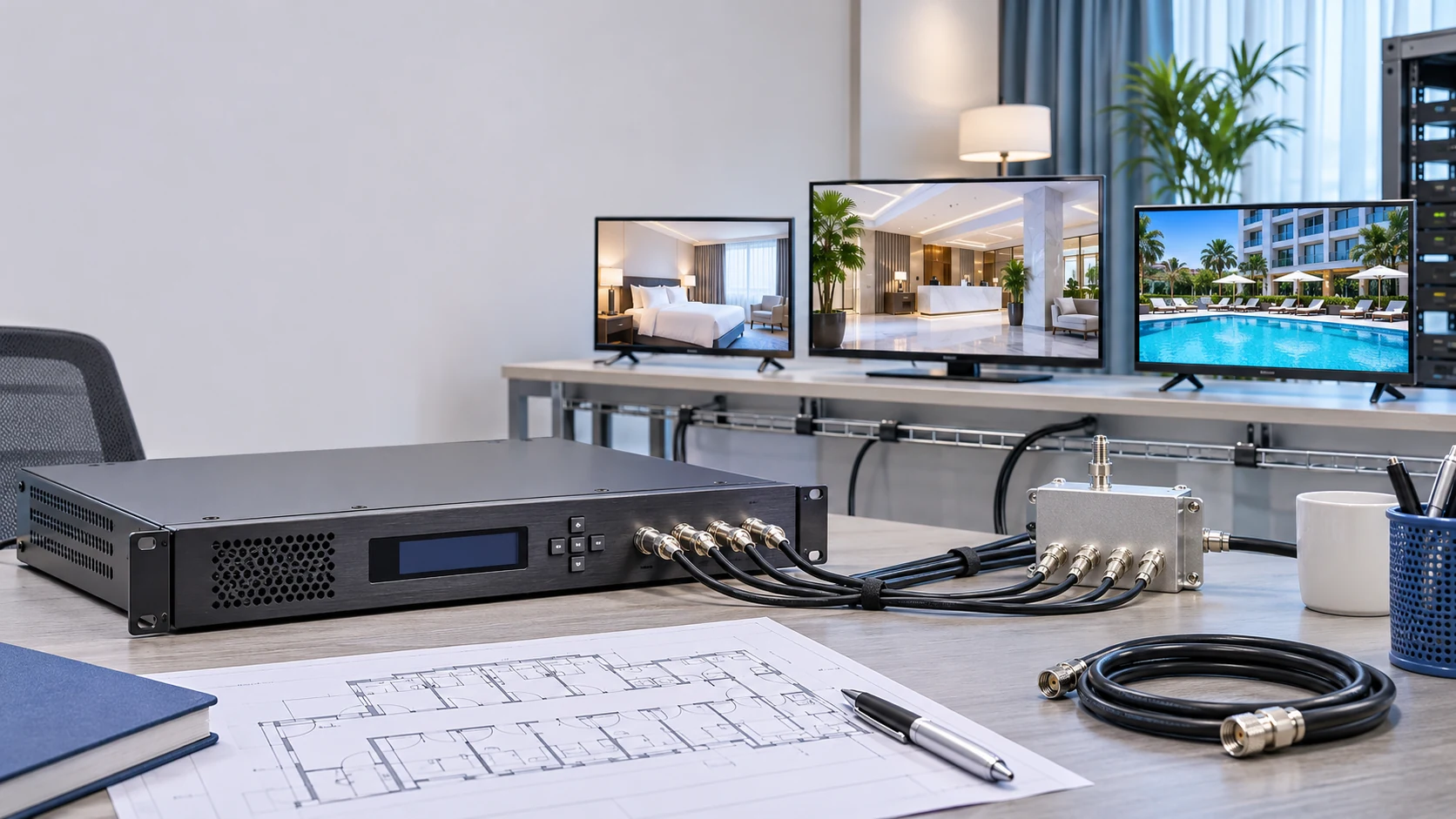
Use the digital modulator product category to identify candidate equipment, then request an exact output-mode specification. All numerical examples here are planning assumptions, not measured SOUKA product performance. The illustrations are generated planning concepts rather than photographs of a customer project.
Record every television family, its regional model suffix, firmware version and available tuning modes. A screen described as a smart TV may have excellent network applications while lacking the tuner or decoder required for the proposed RF service. The model sold in one market may differ from a similarly named model elsewhere.
Separate three compatibility questions
- RF reception: can the receiver tune DVB-T, DVB-T2 or the required DVB-C implementation?
- Programme decoding: does it support the actual video codec, resolution, frame rate, audio format and relevant profiles?
- Hotel operation: can staff scan, order and retain channels using the property's permitted hotel-mode workflow?
Test at least one representative receiver from each group, including the oldest equipment that will remain after refurbishment. If the deployment needs set-top boxes for one group, include their purchase, power, remotes and replacement process in the proposal. Avoid presenting an inexpensive headend as a low-cost solution while leaving those room-side costs outside the comparison.
Build a simple inventory with columns for room group, receiver model, supported modes, codec evidence and trial result. Mark unknown entries as unverified. A supplier statement and a successful sample test are stronger evidence than a country label or a general claim that all modern TVs support the same standard.
For the transmission background, read our DVB-T versus DVB-T2 explanation. This procurement guide extends that comparison to DVB-C and the actual responsibilities of a hotel installation.
DVB-T, DVB-T2 and DVB-C: what changes in a hotel headend?
DVB-T and DVB-T2 are terrestrial television transmission systems using OFDM-based modulation. DVB-T2 introduces a different physical-layer design, including LDPC/BCH error correction and physical-layer pipes. DVB-C, as specified in ETSI EN 300 429, uses a cable transmission system based on QAM. These differences affect transmitter settings and receiver requirements; they do not define the programme's video codec.
| Choice | Why a hotel may consider it | Evidence needed before purchase |
|---|---|---|
| DVB-T | Compatibility with an existing DVB-T receiver population | Exact bandwidth, constellation, coding and receiver scan results |
| DVB-T2 | A design using confirmed DVB-T2 receivers and an appropriate capacity or resilience profile | Supported T2 modes, PLP behaviour and tests on every receiver family |
| DVB-C | Distribution to receivers supporting the selected cable tuning system | Correct cable implementation, symbol rate, QAM order and channel scan behaviour |
The DVB specifications directory identifies the relevant standards. For detailed DVB-T2 configuration background, consult the ETSI DVB-T2 implementation guidelines. Use those documents to interpret a supplier's settings, rather than treating the standard name as a complete equipment specification.
A private coax network can carry an appropriately designed RF service, but distribution over coax alone does not determine whether DVB-T, DVB-T2 or DVB-C should be used. Receiver compatibility, available spectrum and the measured network condition must decide that choice together.
Check the output specification separately from the input specification
A product description containing DVB-T2 may refer to its input tuner, not its output modulator. A gateway might receive a DVB-T2 broadcast and remultiplex selected programmes into a different RF output. Conversely, an HDMI encoder modulator takes a baseband video source and creates a new compressed programme before RF modulation.
Write one signal path for each source
Specify the source interface, processing function and room-side output independently. For example: authorised receiver HDMI output, compatible encoder, transport-stream processing, selected RF modulation, coax distribution, and the tested television tuner. A different path might start with an IP transport stream and require no new video encoding.
DVB-S, DVB-S2 and DVB-S2X belong to satellite transmission families. Their appearance in an input specification does not establish a DVB-T2 output capability. Ask the supplier to identify the precise input/output combination supported by the quoted hardware, installed licences and firmware, with a configuration screenshot or demonstration.
The HDMI-to-RF channel planning checklist helps document the source-to-carrier relationship. Confirm separately whether each RF carrier can contain several programmes, whether carriers are independently configurable, and whether the headline channel count means physical inputs, encoded programmes or RF outputs.
Only use sources for which the property has appropriate distribution rights. Encrypted services and protected HDMI outputs require an authorised, compatible solution. Receiving or connecting a signal is not permission to redistribute it, and bypassing content protection is not an acceptable commissioning method.
Budget useful payload capacity before counting television channels
A television programme and an RF carrier are different things. Several compressed programmes may fit inside one transport multiplex, while a demanding programme can consume a significant part of its useful capacity. The number of guest-room screens is also separate: an RF carrier is distributed through the network rather than encoded again for every television.
Use measured source rates and the chosen RF profile
List the bitrate of each video and audio stream, service-information overhead and any other carried data. For variable-rate services, examine expected peaks and the remultiplexer's behaviour. Compare the resulting transport-stream requirement with the usable payload supported by the exact modulation settings, rather than the raw physical-layer rate or a marketing maximum.
Illustrative calculation: eight programmes budgeted at 4 Mbit/s each require 32 Mbit/s before additional transport and service overhead. That arithmetic does not prove they fit in one DVB-T, DVB-T2 or DVB-C carrier. The answer depends on the selected settings, the equipment's processing limits and the agreed operating margin. Replace the example rates with evidence from the proposed services.
DVB-T2 offers configuration choices that can improve spectral efficiency or trade capacity against robustness, but there is no universal percentage gain for every hotel. A higher-order constellation or more aggressive coding profile also changes the reception conditions that must be met. Do not sell unused theoretical capacity at the expense of reliable room reception.
Ask the supplier for a carrier-by-carrier worksheet showing programme names, peak load, useful output capacity and spare margin. Keep source processing, multiplex capacity and the number of physical RF outputs as separate lines in the purchase specification.
Match the RF channel plan to the existing coax network
Survey the network before fixing the output standard or frequency plan. Record the rack layout, combiners, amplifiers, splitters, taps, cable routes and representative outlet measurements. A channel plan that works on a short patch lead may fail at the end of a long branch or overload a receiver near an amplifier.
Check which frequencies are already occupied and which paths have enough usable bandwidth. Avoid overlaps with existing services and account for filter passbands, frequency-dependent cable loss and amplifier limitations. Do not increase output level blindly: excessive level or composite loading can create a different reception problem.
Agree measurable limits for this design
The acceptance schedule should identify the selected RF standard and configuration, outlet level range, modulation error ratio, relevant bit-error measurements and the instruments used. Set limits using the equipment specifications and the engineer's link budget. One generic MER threshold cannot responsibly cover every constellation, coding profile, receiver and network condition.
For DVB-C, confirm the precise cable tuning implementation and supported symbol rates. A television offering a QAM option is not automatically compatible with every QAM-based cable system. This matters when comparing regional television variants or reusing equipment from another country.
Our QAM modulator procurement guide develops the cable-side selection questions. Use it alongside this comparison when DVB-C is a candidate, and retain the room measurements as project evidence rather than substituting a product datasheet for a distribution survey.
If large sections of coax need replacement, compare the complete repair scope with an alternative architecture before committing. The cheapest standalone modulator may not produce the lowest installed cost.
Prove the proposed settings on real hotel televisions
Arrange a trial with the actual source formats, the proposed modulator configuration and representative televisions. The aim is to prove the complete service path, including how hotel staff operate it. A spectrum display showing a clean carrier is useful, but does not by itself prove channel discovery, audio decoding or correct programme names.
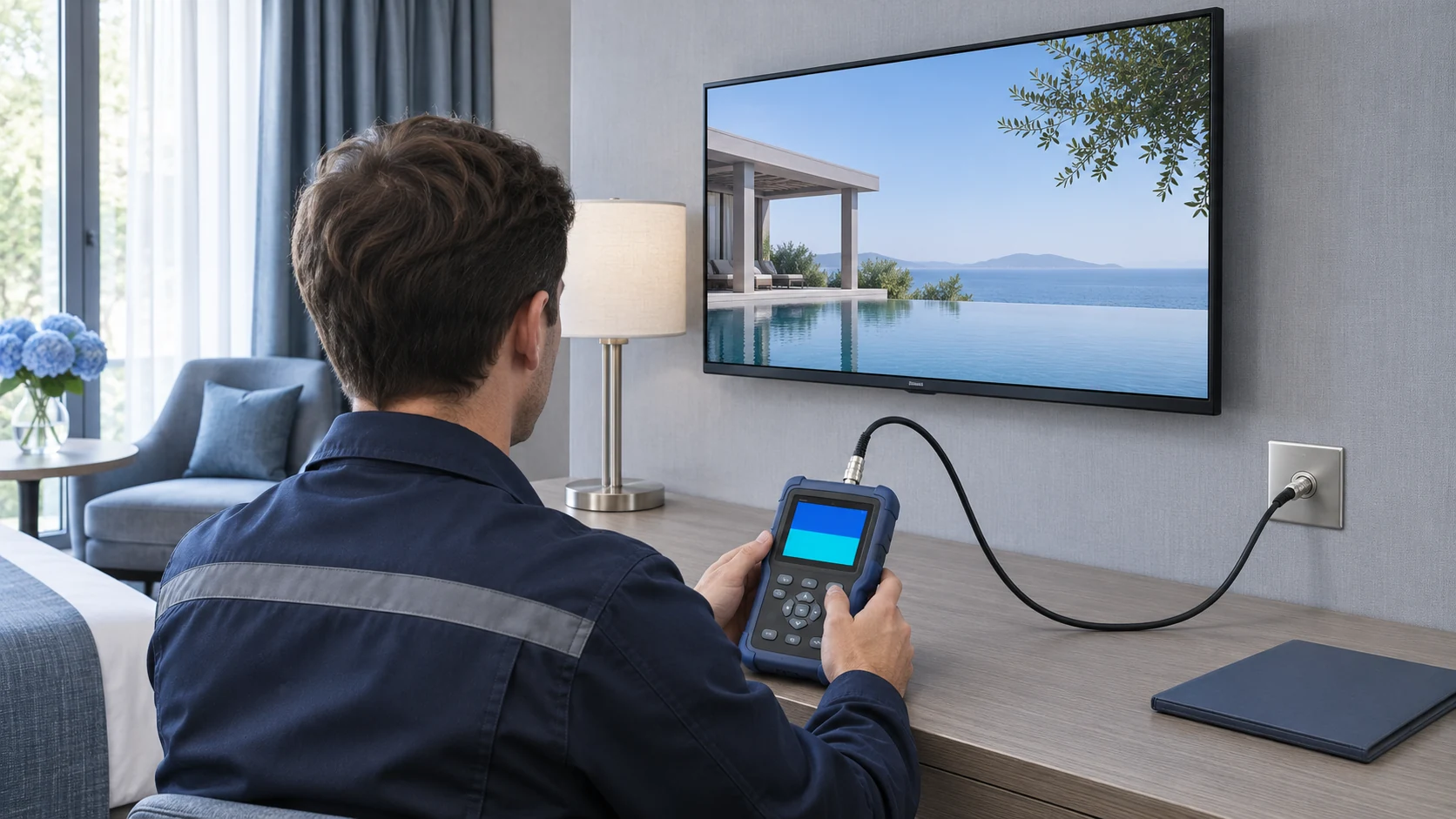
- Scan and identification: confirm that every agreed receiver family finds all intended services with correct names and no unexplained duplicates.
- Programme playback: check picture, audio, language tracks and lip sync using the authorised live sources, not only a test clip.
- Simultaneous load: operate the full proposed lineup while checking multiplex load and representative outlets.
- Room coverage: test near, far and otherwise difficult outlets identified by the survey.
- Recovery: perform agreed maintenance restarts and verify saved settings, channel retention and recovery of service.
- Handover: archive configuration exports, receiver versions, measurements and the final channel list.
Include several normal operating states: a source restart, a receiver power cycle and a permitted change between programmes. Define the observation period and pass criteria with the property before testing. Do not claim that a short bench demonstration establishes long-term availability.
The professional RF modulator test guide provides a broader comparison framework. Keep its common test method while applying limits and receiver requirements specific to the selected DVB profile.
Plan migrations without forcing every room to change at once
A hotel with mixed television generations may need a staged migration. Group rooms by confirmed receiver capability and refurbishment timing. Then compare a compatible common RF mode, selected room-side receiver replacements, or a designed parallel service during transition.
Price the whole transition
Parallel transmission can consume extra RF outputs and spectrum, and may require additional processing. It should not be assumed to be a free software switch. Likewise, a multi-standard chassis may support selectable modes without transmitting all of them simultaneously. Request explicit evidence for the proposed operating combination.
A phased plan should specify which room groups change, who retunes the televisions, how channel lists are distributed, and how the previous service is restored if acceptance fails. Schedule work around occupancy and staff availability. Save the original headend configuration before altering a live service.
Compare these practical costs: receiver replacement, remote controls, staff time, coax repairs, spare equipment, maintenance access and the effect of a headend failure. A single high-density platform may simplify the rack but create a larger failure domain; multiple units may offer a different maintenance trade-off.
The hotel cable TV solution is relevant when the project retains RF distribution. The hotel IPTV solution offers an architecture to evaluate when interactive services or a managed IP distribution network are part of the actual brief. These are design alternatives to assess against requirements, not an automatic reason to replace working coax.
Document what the first phase delivers and what remains optional. A clear boundary protects the buyer from purchasing a future migration capability that has not been demonstrated on the installed receivers.
Diagnose compatibility failures before replacing equipment
Use the symptom to choose the next test. Changing several settings together makes it difficult to establish why a service recovered and can disturb rooms that were already working. Save the current configuration, change one agreed variable, and record the result against the affected receiver group.
No channels appear during a scan
First confirm the receiver's tuning mode and frequency range, then verify that the expected carrier is present at its outlet. Check the selected bandwidth or symbol rate and the television's scan procedure. If a direct headend connection works but the room outlet does not, investigate the distribution path before ordering a different transmission standard.
Channels appear but picture or sound is missing
A service name in the channel list does not prove that the television can decode its programme. Check the video and audio formats, stream identification and actual source state. Compare a known compatible programme on the same RF path. For DVB-T2, also confirm that the receiver supports the particular T2 configuration being transmitted rather than assuming that any T2 label covers every operating mode.
Reception fails only at some outlets or under full load
Compare measured levels and error performance at working and failing locations. Examine amplifier loading, connections, frequency response and the combined channel plan. If the problem follows a programme instead of an outlet, inspect its source and transport load. Do not treat every visible block or audio dropout as evidence that the modulation standard is wrong.
Keep a concise fault record: time, service, receiver model, outlet, settings, measurements and the single change tested. That record lets the supplier reproduce the issue and helps the property's maintenance team distinguish a source fault from an RF or receiver compatibility problem.
What should a DVB-T2 modulator quotation include?
Send a structured requirement pack to each supplier and request answers against the same rows. This makes quotations comparable and exposes missing room-side work early. A short statement such as “DVB-T2, HD, multi-channel” leaves too many engineering decisions unresolved.
| Requirement | What the supplier should return |
|---|---|
| Sources and rights | Supported interfaces, formats, authorised processing path and simultaneous input limits |
| RF output | Exact DVB modes, carrier count, frequency range, bandwidth or symbol rate, and simultaneous-mode restrictions |
| Programme capacity | Useful payload at the proposed settings, peak-load assumptions and spare margin |
| Receiver compatibility | Tested model and firmware list, codec support and scan procedure |
| Distribution network | Survey assumptions, required repairs and agreed outlet measurement limits |
| Operation and support | Configuration backup, recovery process, spares, warranty scope and support responsibility |
| Commercial scope | Hardware variant, licences, accessories, installation exclusions and delivery assumptions |
Request a sample configuration and a written acceptance plan before approving the order. Where a requirement is not confirmed, record it as an open condition rather than silently treating it as included. Distinguish verified functions from optional firmware, separately licensed features and future development proposals.
Ask who owns the channel schedule after handover and who can authorise a change. Keep a change log with the previous settings, reason for modification and rollback file. That operational detail matters when a source changes format months after installation.
For a repeatable B2B purchase, retain the accepted bill of materials and configuration together. An identical model name does not guarantee an identical hardware option, licence or firmware build.
Related Products
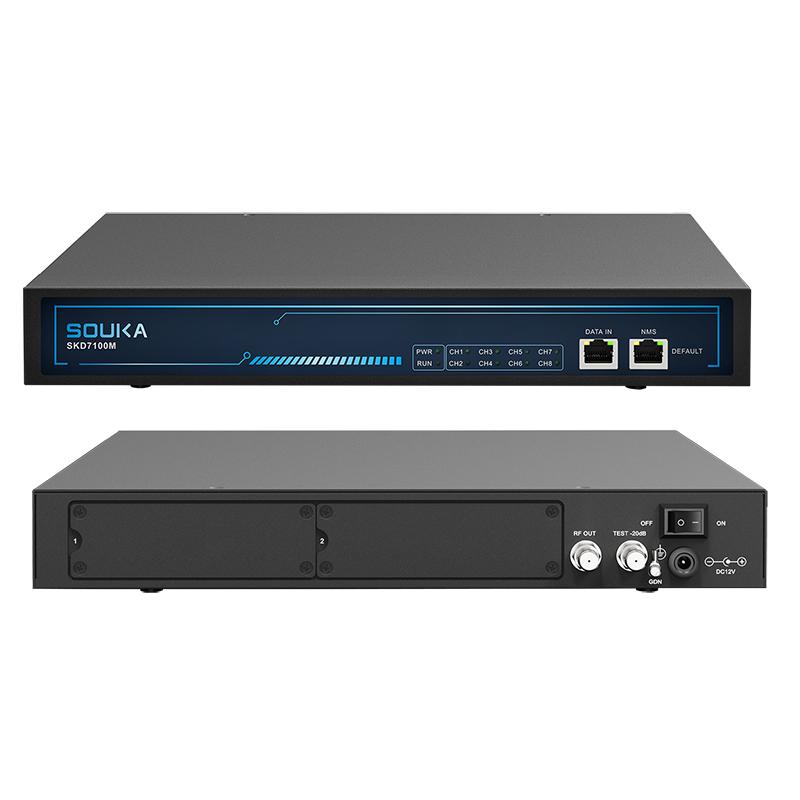
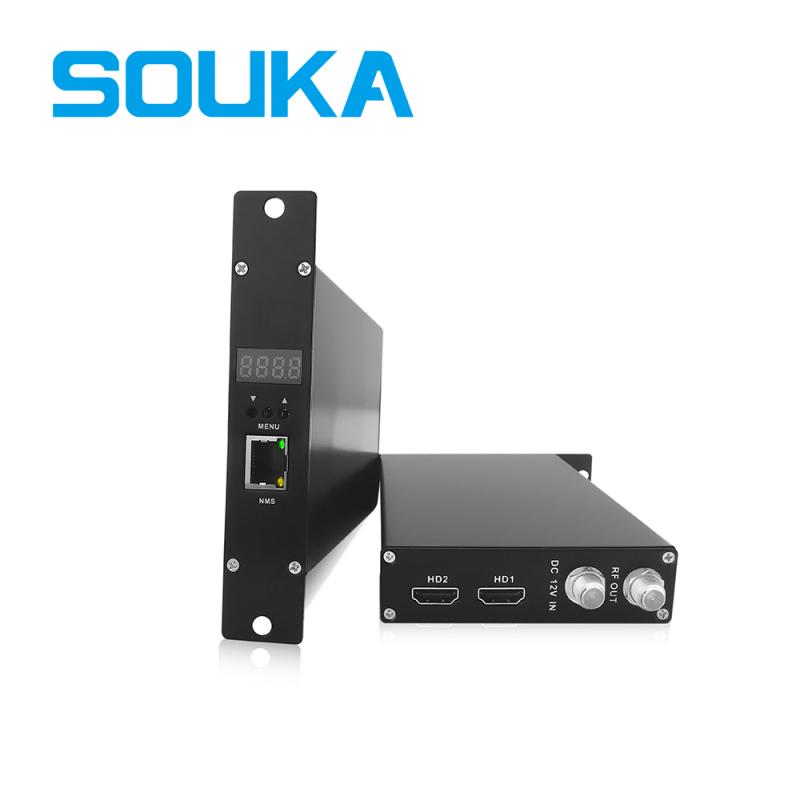
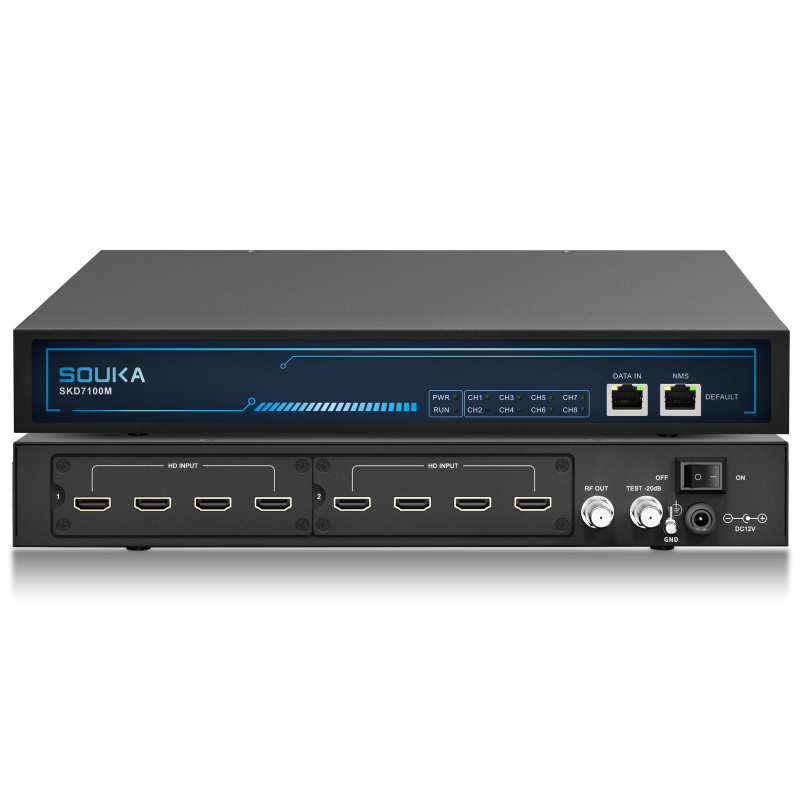
Related Solutions
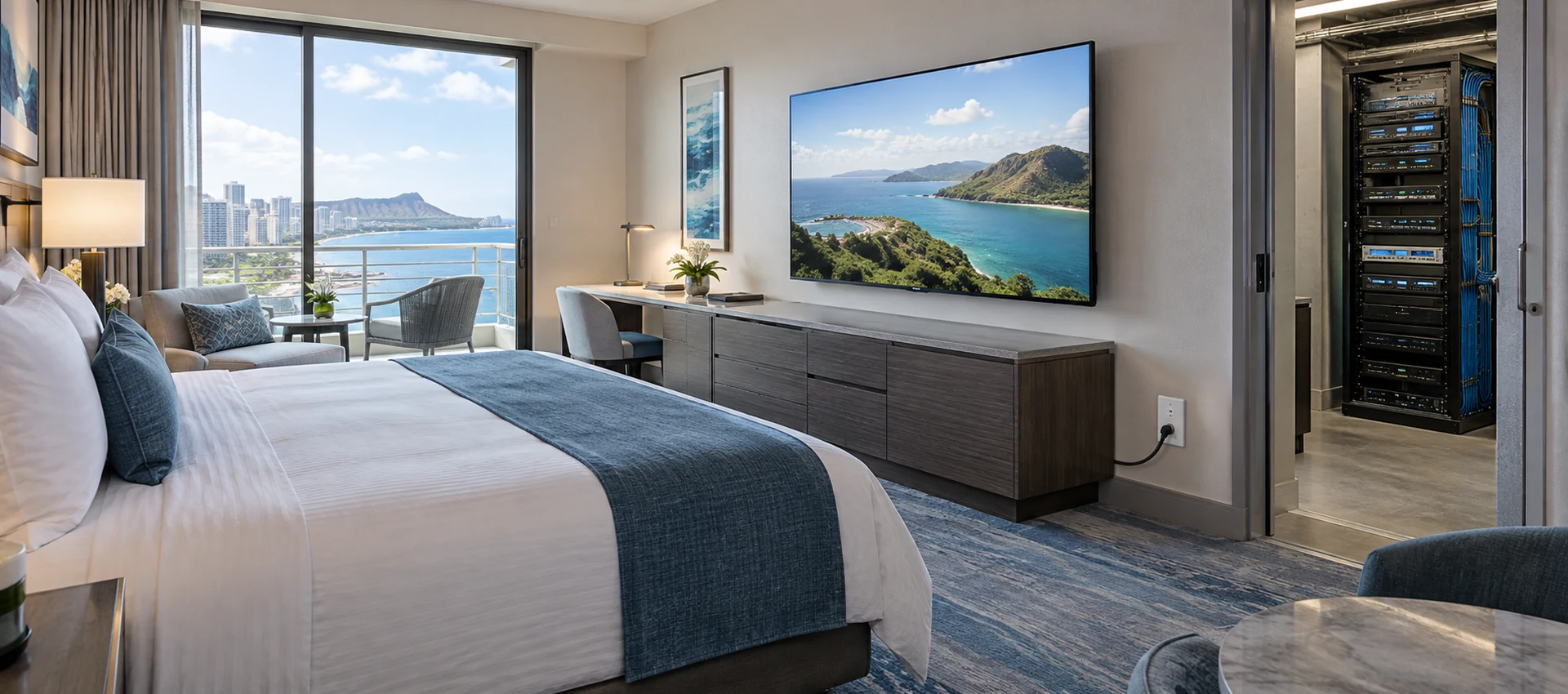
Cable TV Solution for Hotels
Deliver stable live television to every guest room without rebuilding the property network. SOUKA combines multi-source reception, high-density digital or analog modulation, RF combining, amplification, and centralized headend management for new hotels, phased renovations, and legacy coax upgrades.
Explore Solutions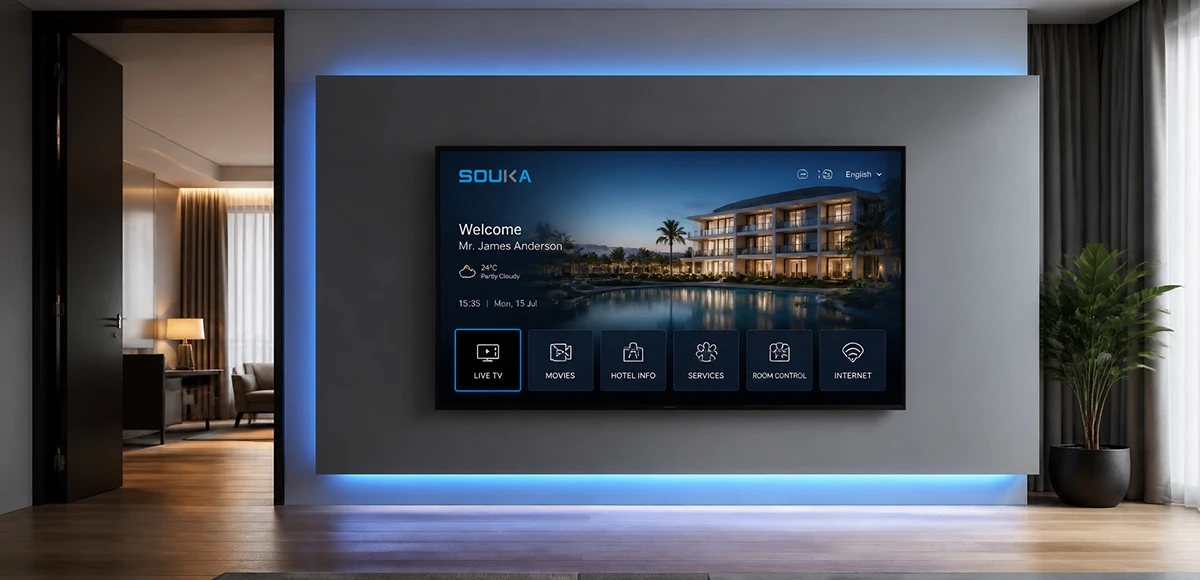
IPTV Solution for Hotels
Deliver lag-free 4K live TV to every guest room, customize your interactive brand interface with zero coding, and automate database workflows. Our carrier-grade Linux streaming matrix bridges natively with global property management systems to eliminate integration friction and slash hardware deployment overhead.
Explore Solutions
Cable TV Solution for Hotels
Deliver stable live television to every guest room without rebuilding the property network. SOUKA combines multi-source reception, high-density digital or analog modulation, RF combining, amplification, and centralized headend management for new hotels, phased renovations, and legacy coax upgrades.
Explore Solutions
IPTV Solution for Hotels
Deliver lag-free 4K live TV to every guest room, customize your interactive brand interface with zero coding, and automate database workflows. Our carrier-grade Linux streaming matrix bridges natively with global property management systems to eliminate integration friction and slash hardware deployment overhead.
Explore SolutionsFrequently Asked Questions
Conclusion
Choose a DVB-T2 modulator only after confirming that the hotel's receivers support the proposed RF profile and the programmes inside it. DVB-T can remain appropriate for a compatible installed base; DVB-C can be suitable for a correctly matched cable receiver population. The best choice is the one that meets the receiver, capacity, distribution and operating requirements with evidence.
Start with an inventory, separate source inputs from RF outputs, budget useful payload, and test the complete lineup at representative outlets. Keep the channel plan and recovery configuration with the handover records so the installation remains maintainable after commissioning.
Send SOUKA your television model list, source interfaces, proposed programme lineup and coax network information. Request a digital RF modulator configuration review with written output-mode confirmation and a project-specific acceptance checklist, rather than selecting equipment from the DVB standard name alone.